Home / Quality & Testing
Product Quality, Testing & Documentation
Every claim needs a defined test condition. This page describes how units are assembled, inspected and documented, and states plainly what is model- and order-specific rather than implying a universal guarantee.
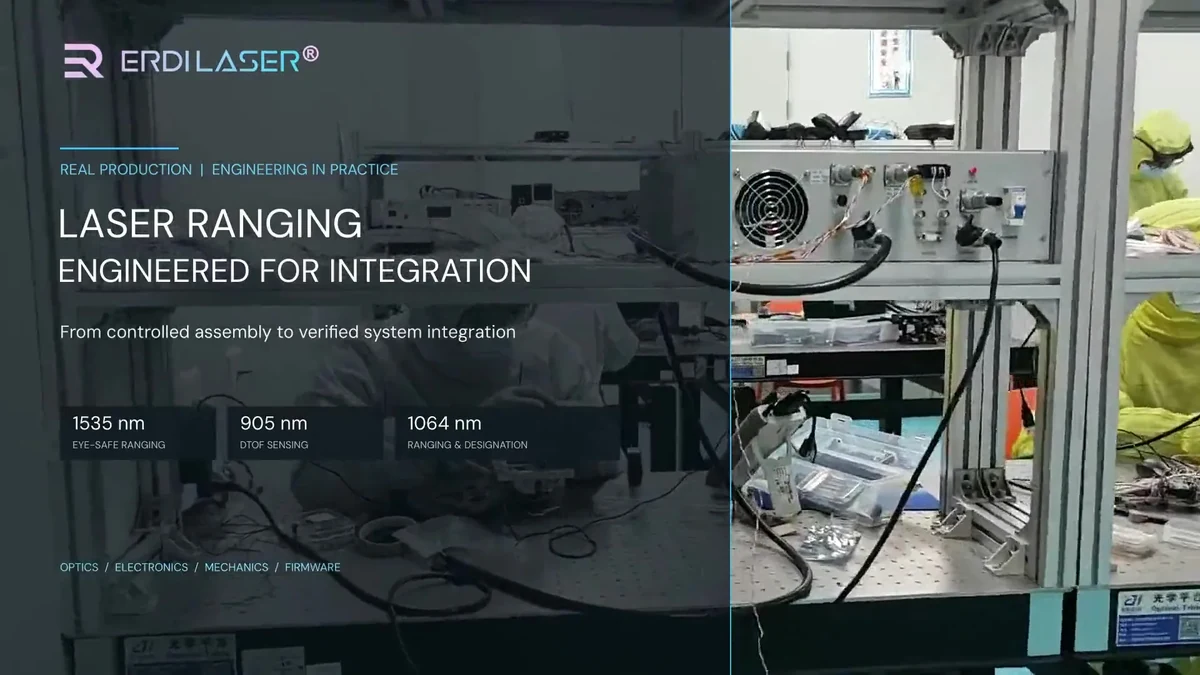
Inside Assembly, Alignment and Verification
The sequence below reflects how ERDI builds and releases hardware. The exact inspection and qualification plan is model- and order-specific; confirm the applicable plan for your order.
- Component preparation
Controlled work areas and organized build flow. - Electrical setup
Harness, drive and functional connection. - Optical alignment
Bench fixtures, axis control and adjustment. - Functional verification
Measurement behaviour checked before release. - Engineering collaboration
Configuration questions reviewed across disciplines.

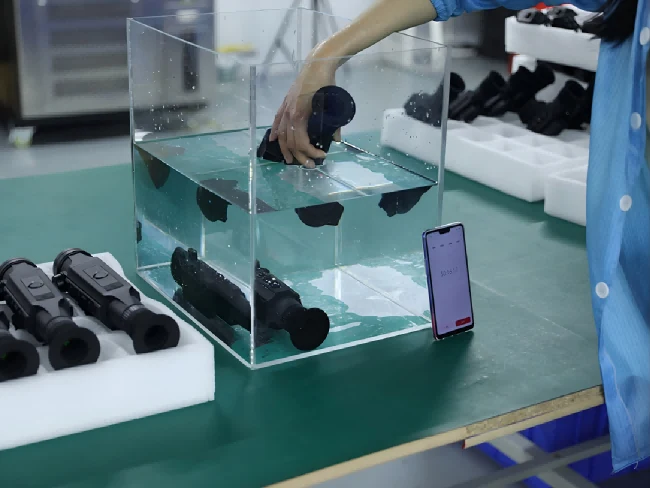
Every Claim Needs a Defined Test Condition
The framework below shows how requirements become evidence, without turning a standard name into a blanket certification claim.
| Stage | What is checked | Question the record answers |
|---|---|---|
| Incoming material and optics | Approved source, lot identity, optical specification and incoming inspection. | Does the build match the controlled optical stack? |
| Source characterisation | Pulse energy, pulse width, repetition behaviour and beam characteristics as applicable. | Was the source measured under the stated drive and temperature conditions? |
| Ranging and detection | Receiver response, timing, resolution, target reporting and defined range tests. | Are target size, reflectance, visibility and detection logic recorded? |
| Mechanical and electrical integration | Power, interface, connector, mechanical datum, boresight and thermal path. | Does the delivered configuration match the approved host interface? |
| Configuration and release | Configuration ID, functional sequence, inspection result and release record. | Can the shipped unit be traced to its accepted specification? |
Standards Inform the Method; the Contract Defines the Evidence
These references help define safety classification, beam measurement, coating requirements and environmental methods. Their presence here does not assert blanket certification for every ERDI model.
- IEC 60825-1
Laser-product classification and accessible-emission safety requirements. - ISO 11146-1:2021
Measurement of laser-beam width, divergence and beam-propagation ratios. - ISO 9211 series
Terminology, specification and test framework for optical coatings. - IEC 60068-2-6 / -2-27
Sinusoidal vibration and shock test methods for components and equipment.
Different Platforms Need Different Acceptance Logic
ERDI starts with the host system and operating condition, then narrows the wavelength, range architecture, interface and verification plan.
UAV and Stabilized EO/IR Payloads
Low mass, power transients, vibration, update rate, boresight and serial timing are reviewed together.
Surveying, Mapping and Handheld Optics
Range repeatability, display cadence, optical window, user safety and battery budget shape the selection.
Industrial Monitoring and Robotics
Target material, incidence angle, update frequency, interface latency and enclosure contamination become primary inputs.
Research and Test Instrumentation
Trigger ownership, raw data, pulse characterization, calibration method and uncertainty reporting matter as much as nominal range.
Long-Range Observation Systems
Atmospheric loss, target definition, host aperture, stabilization and thermal drift determine practical detection margin.
1064 nm Integrated Programs
Energy, coding, pointing, safety controls, compliance scope and verified end use are reviewed before configuration.
Certifications
Documentation held by ERDI TECH LTD. Certificate numbers and validity periods are confirmed on request.
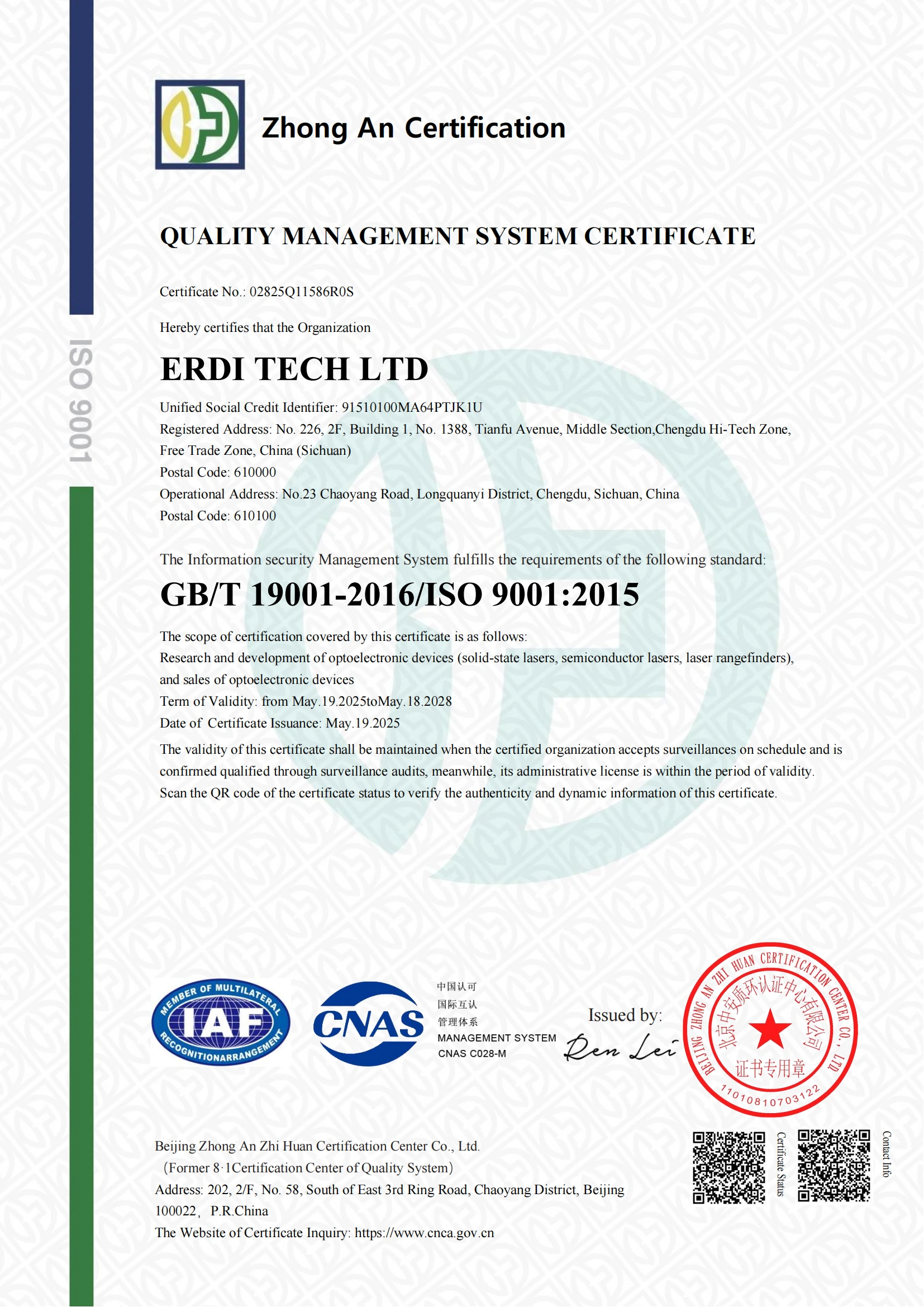
Quality management system certification.
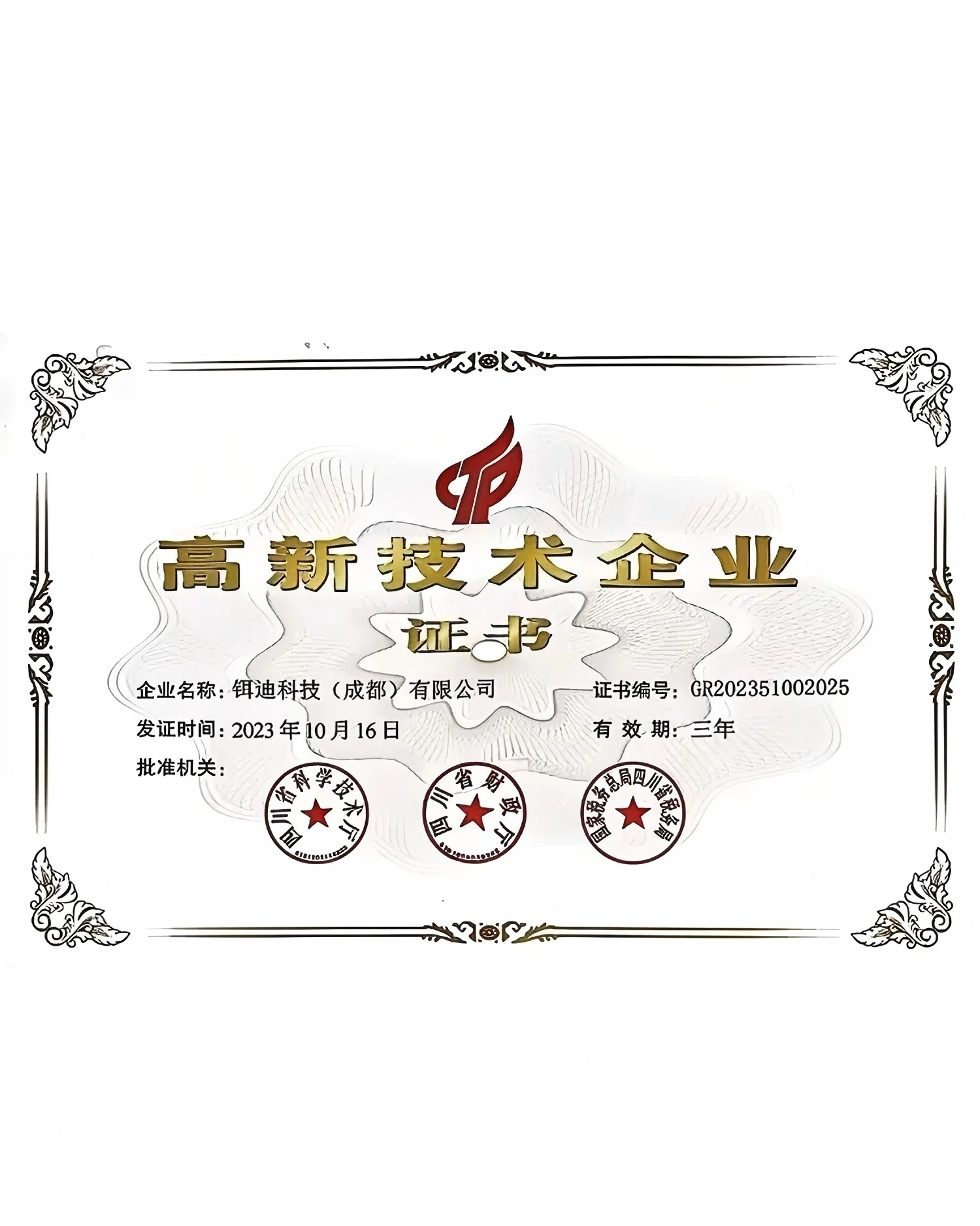
Technology enterprise certification.
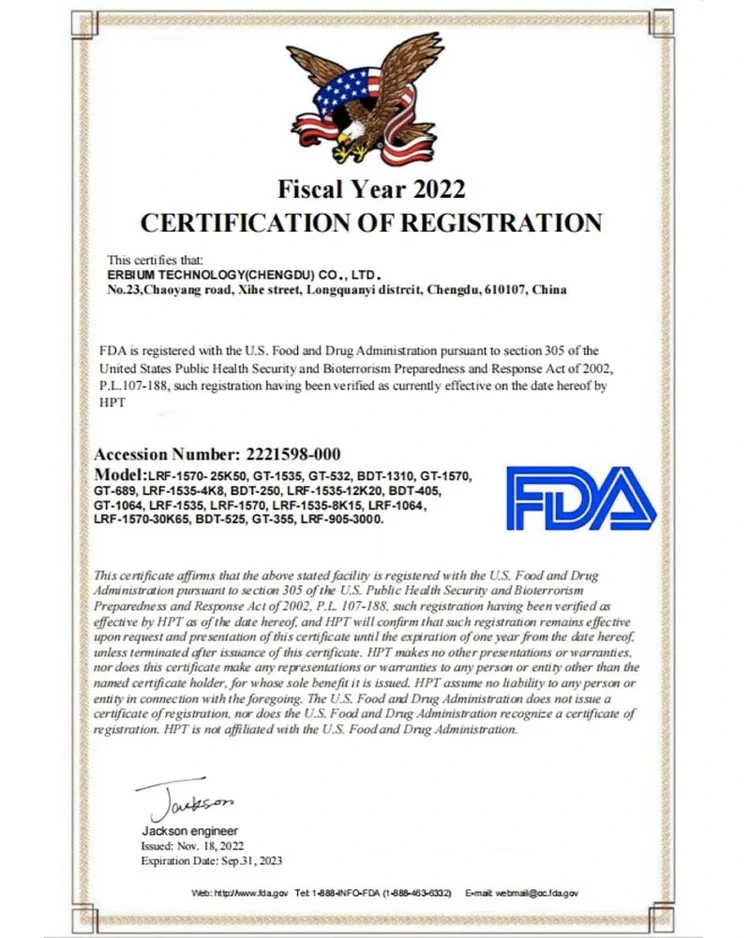
US FDA establishment registration.
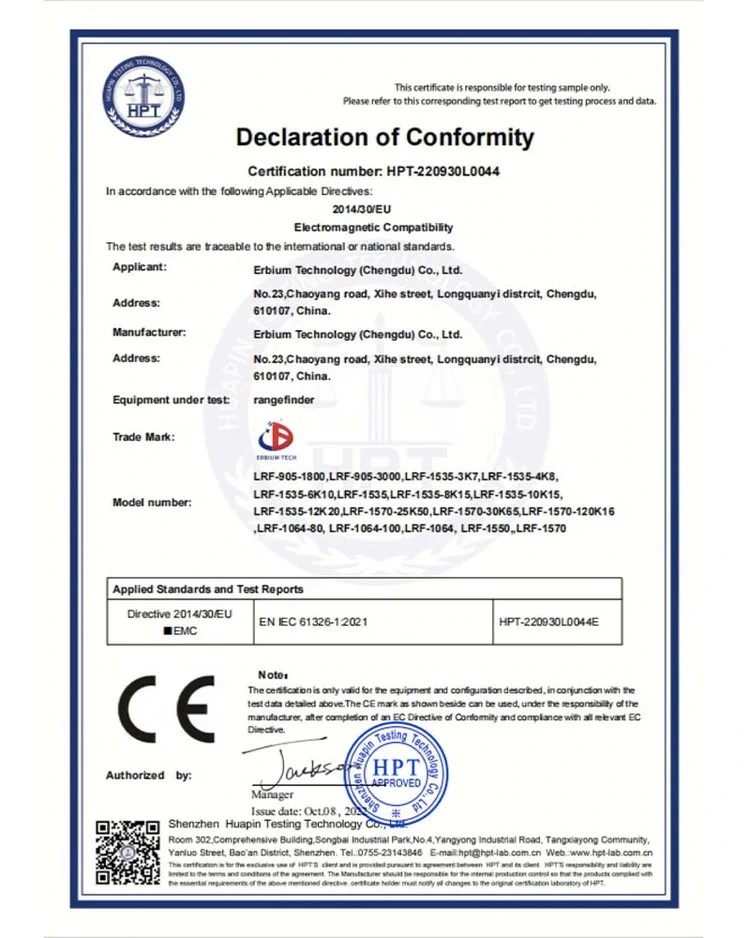
European conformity declaration.
Wording note
ISO 9001 certifies a quality management system, not individual products. FDA establishment registration is a registration, not an approval. The standards listed above are method references, not claims of certification. This page uses the accurate terms deliberately.