
Coșul dvs.

Coșul dvs. este gol momentan.

CONTINUAȚI CUMPĂRĂTURILE
1 / 8

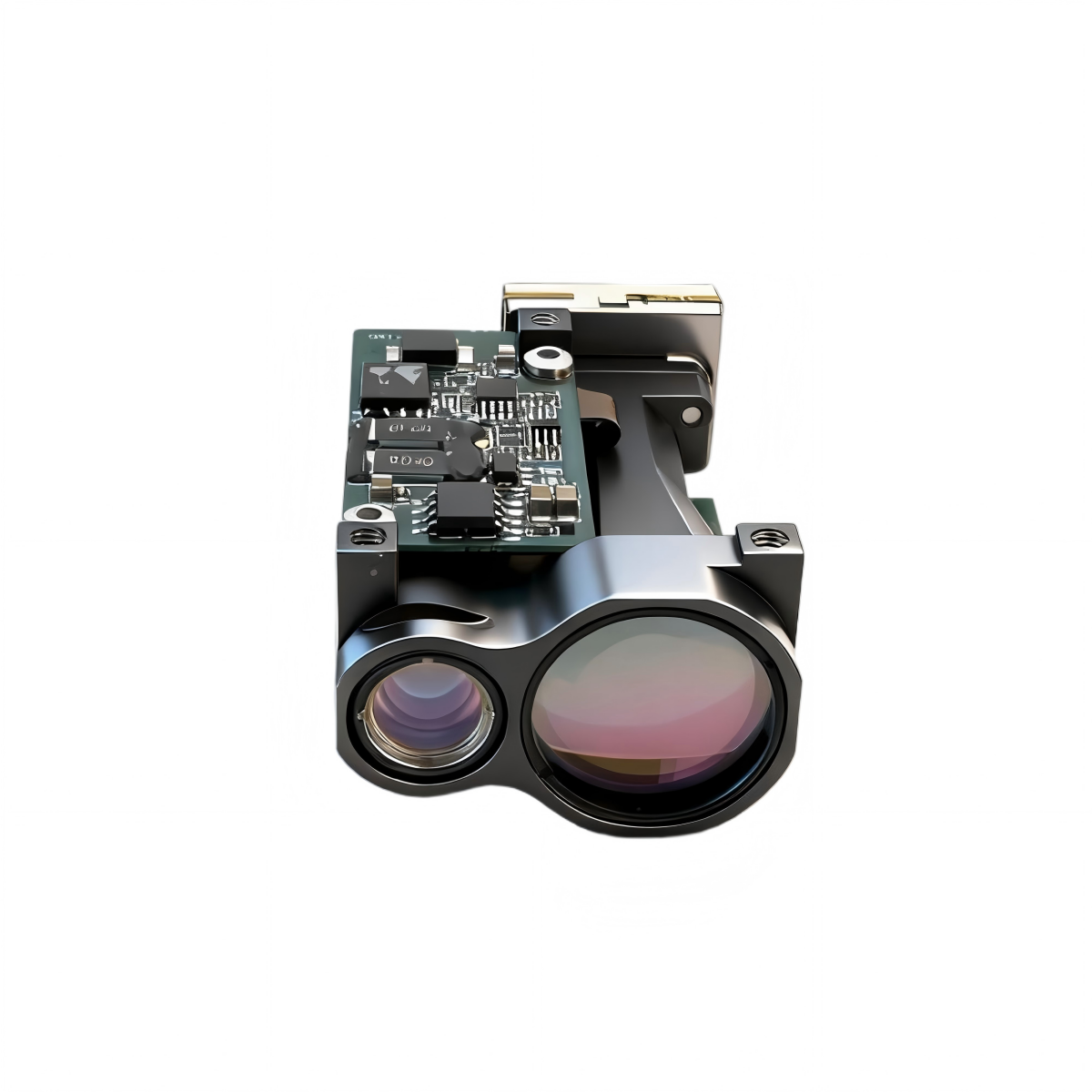
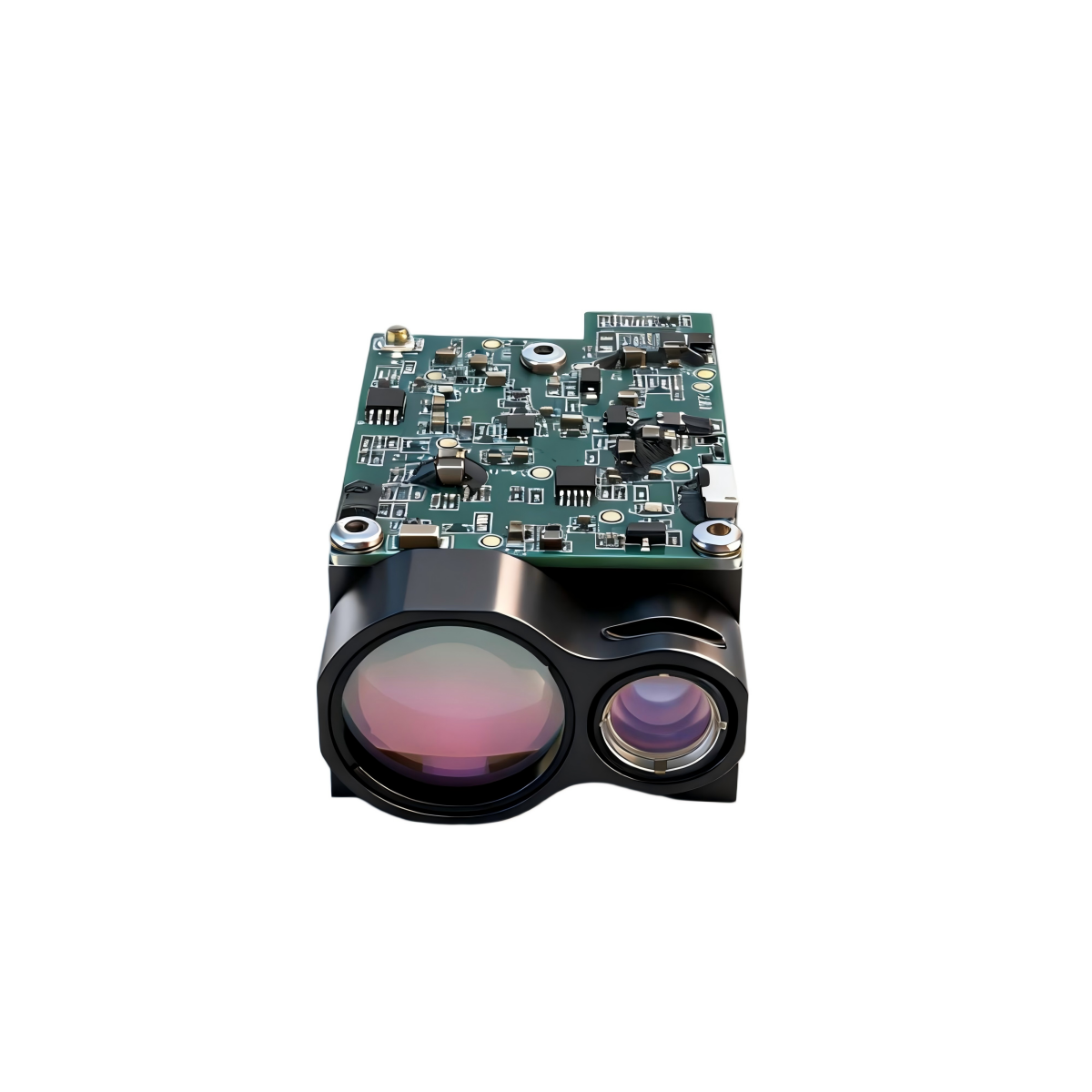
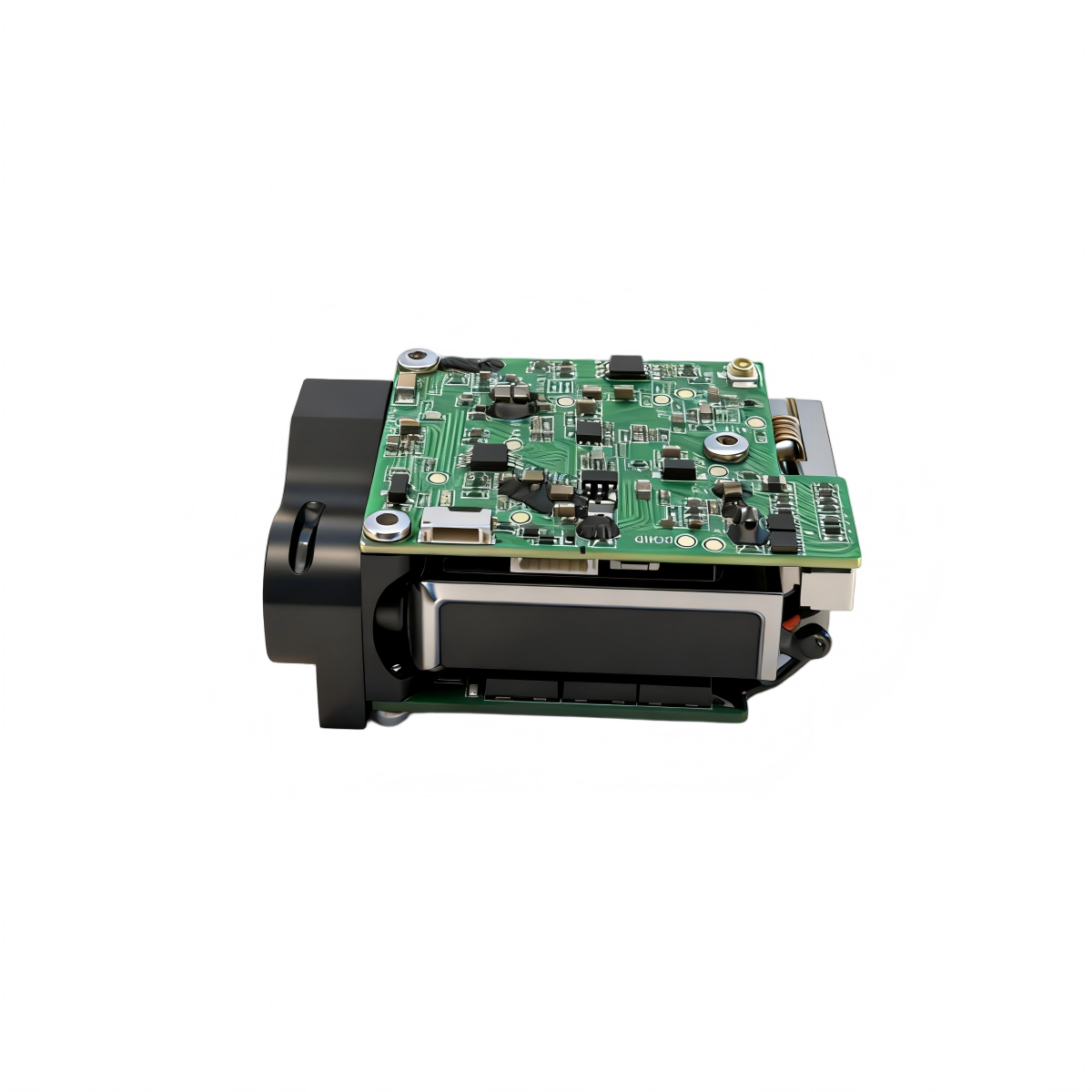
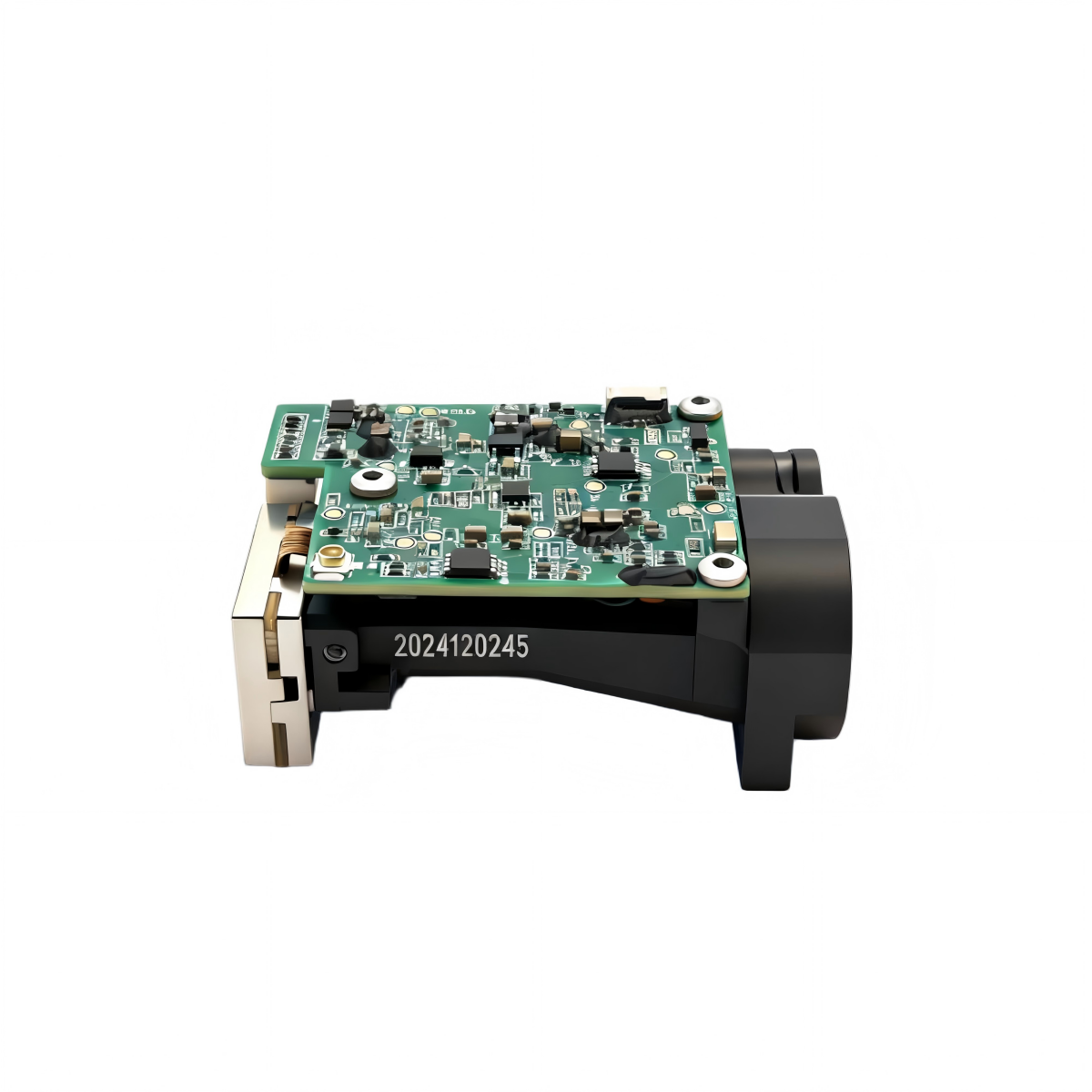
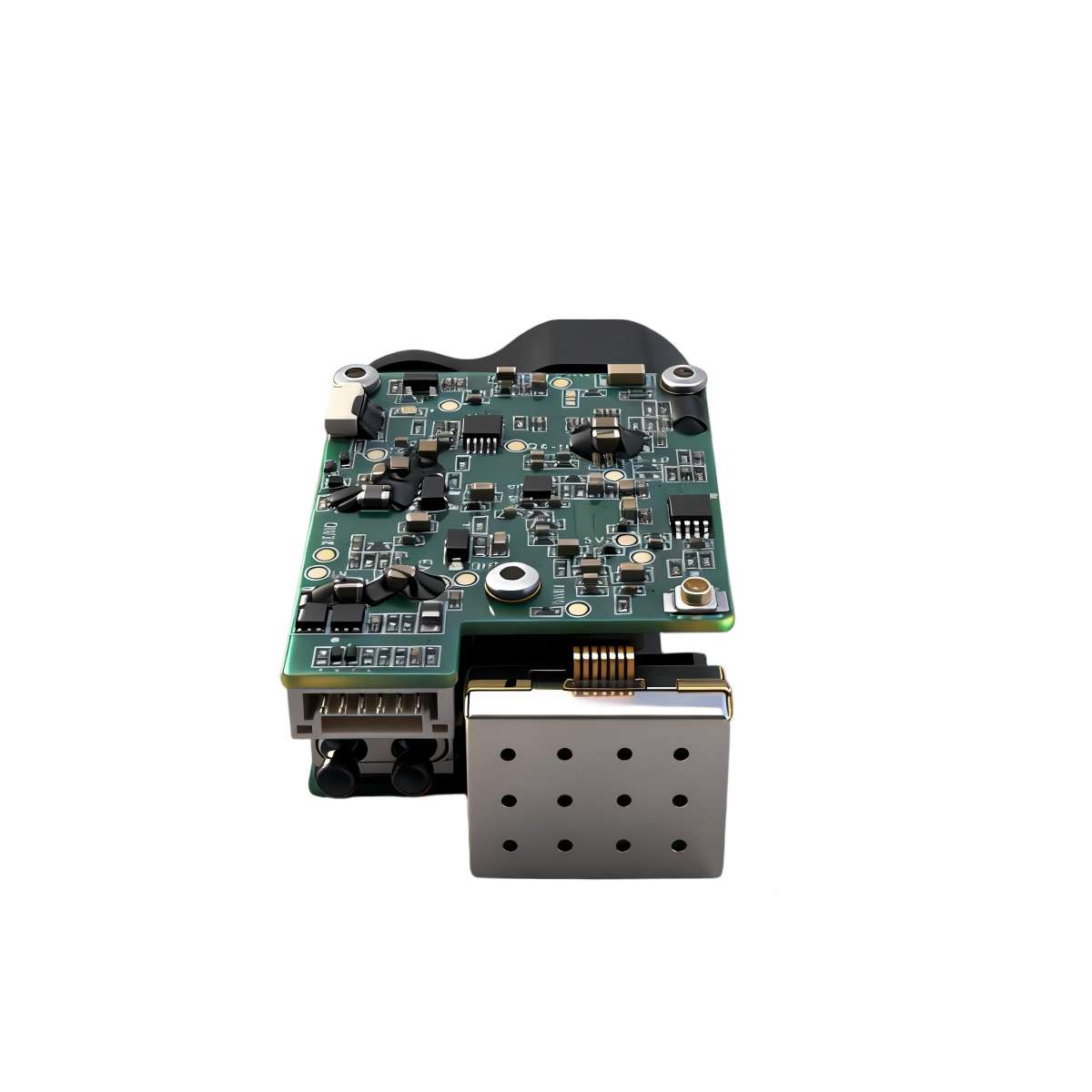
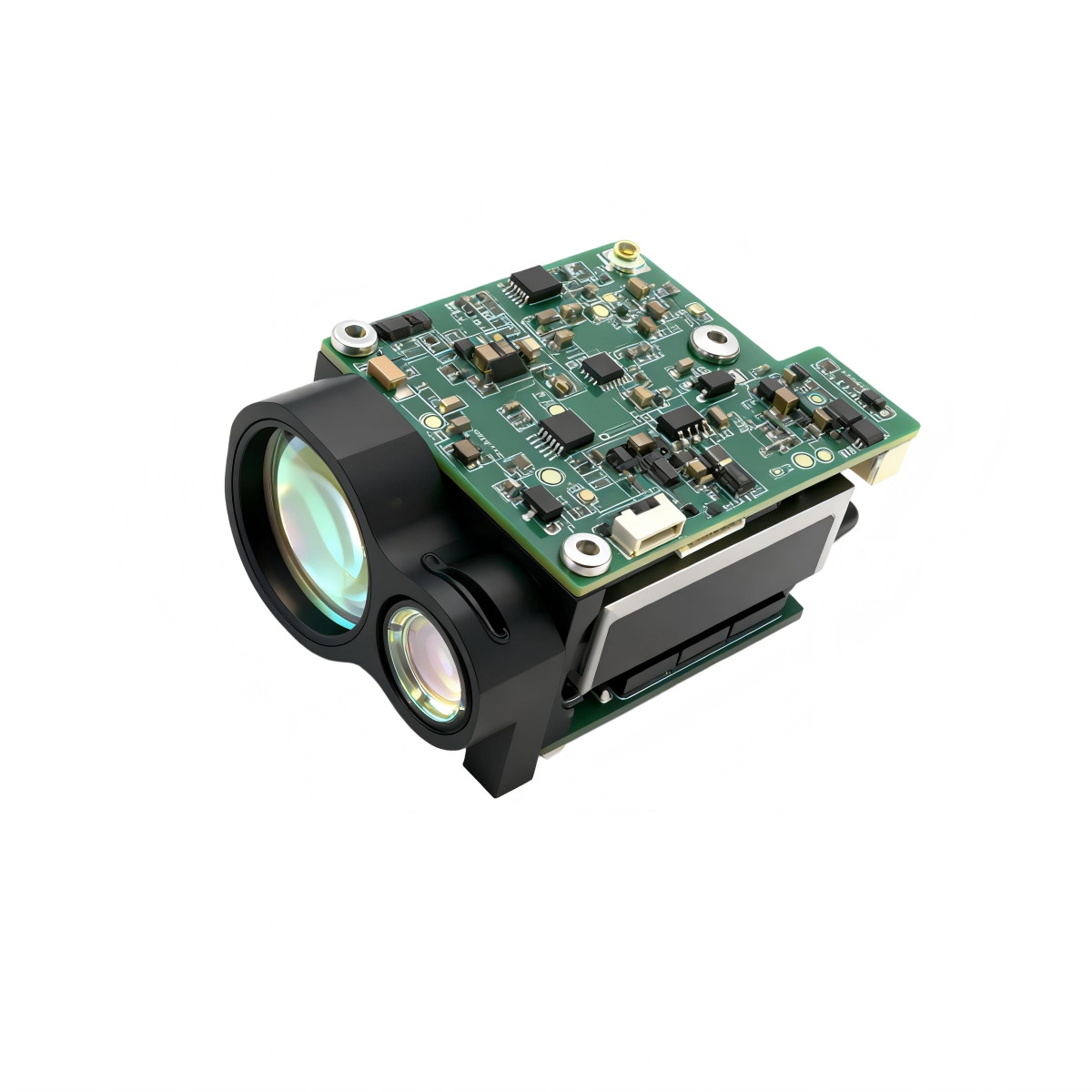
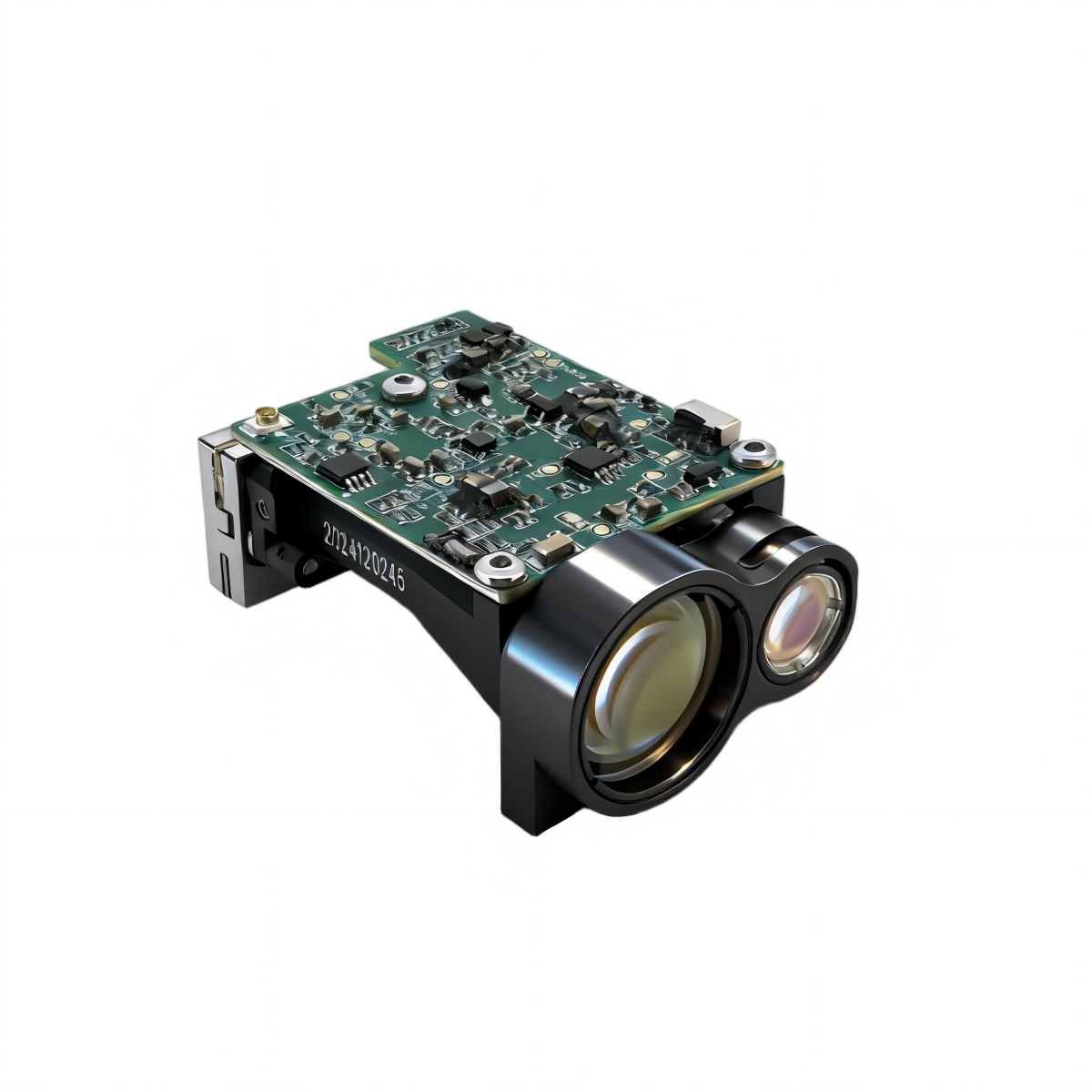
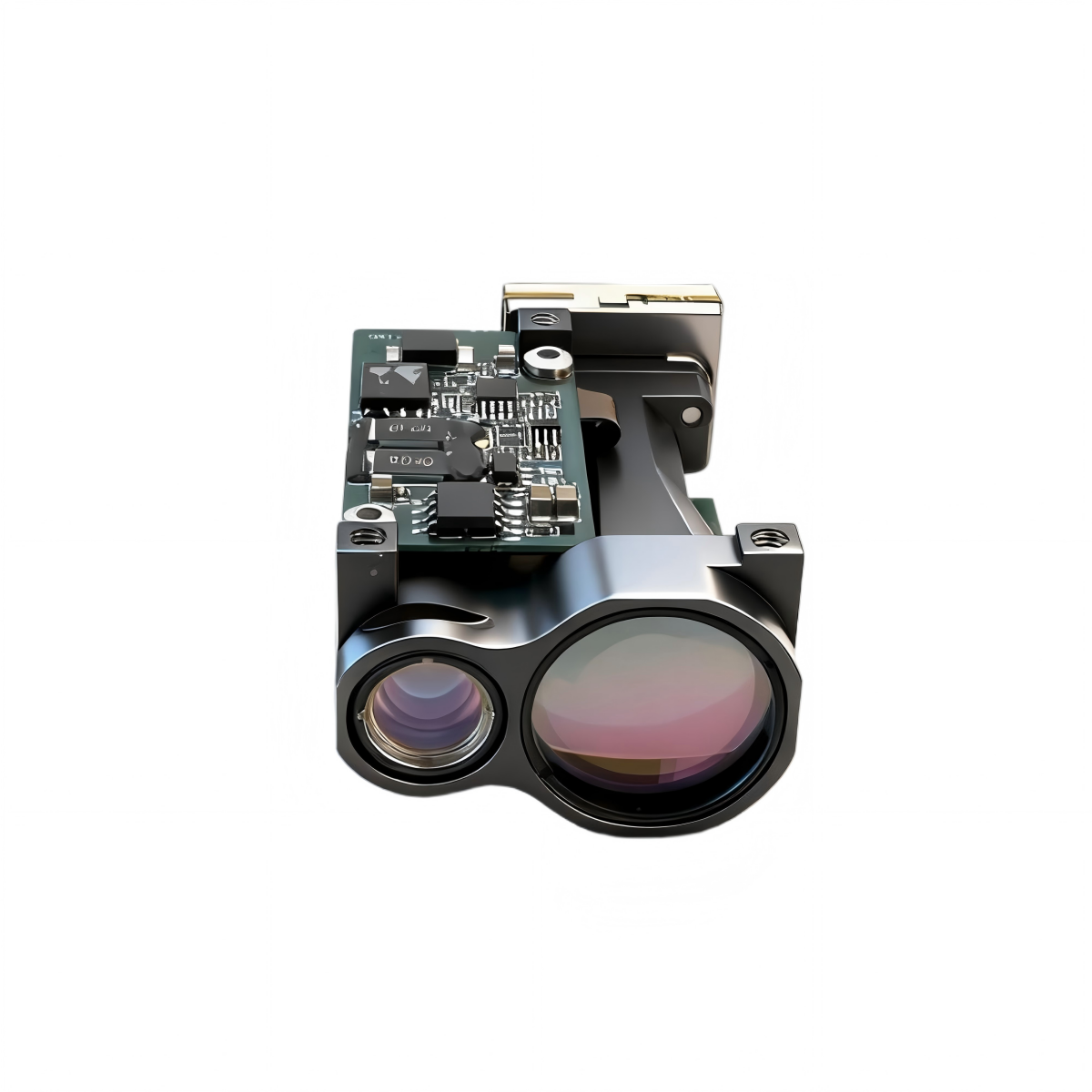
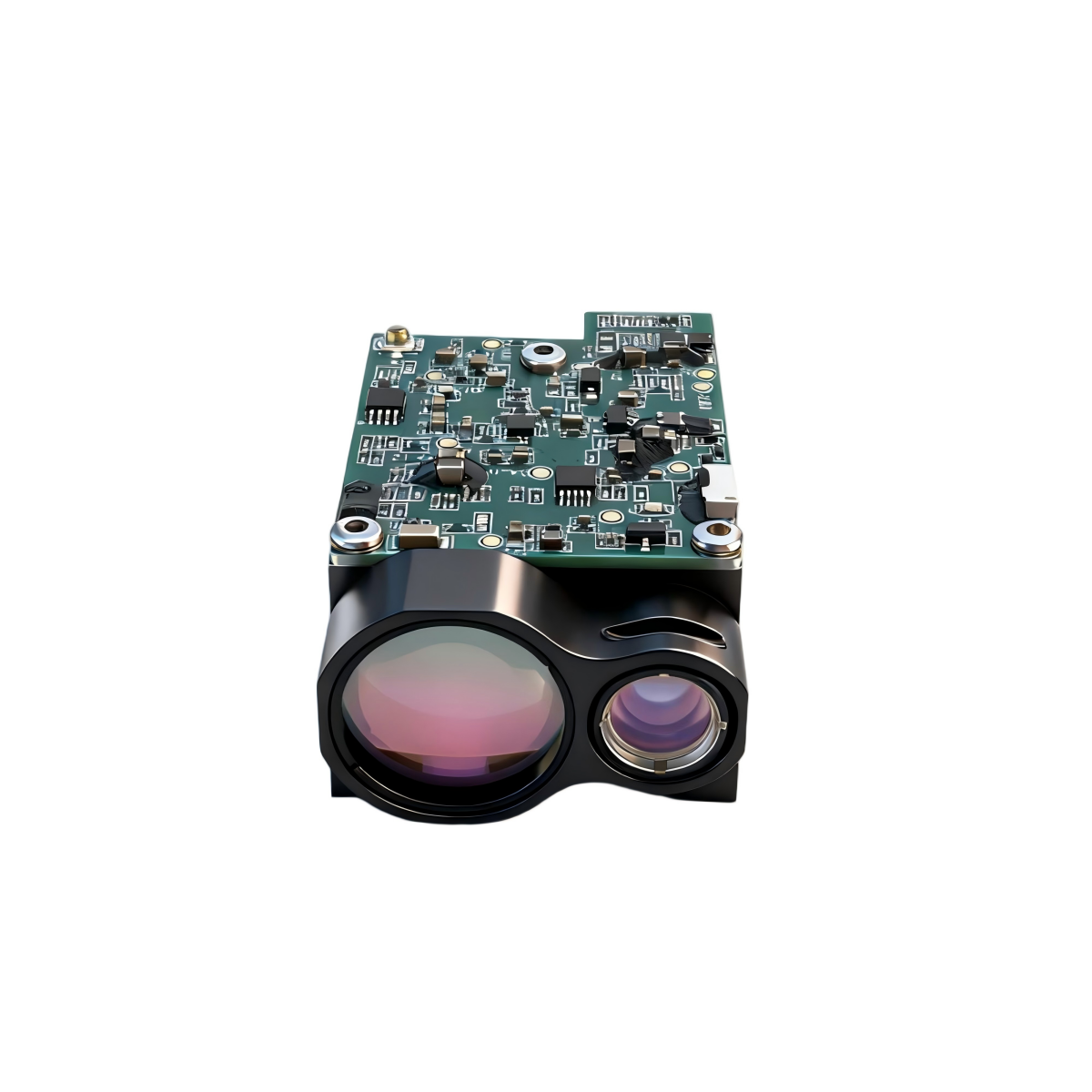
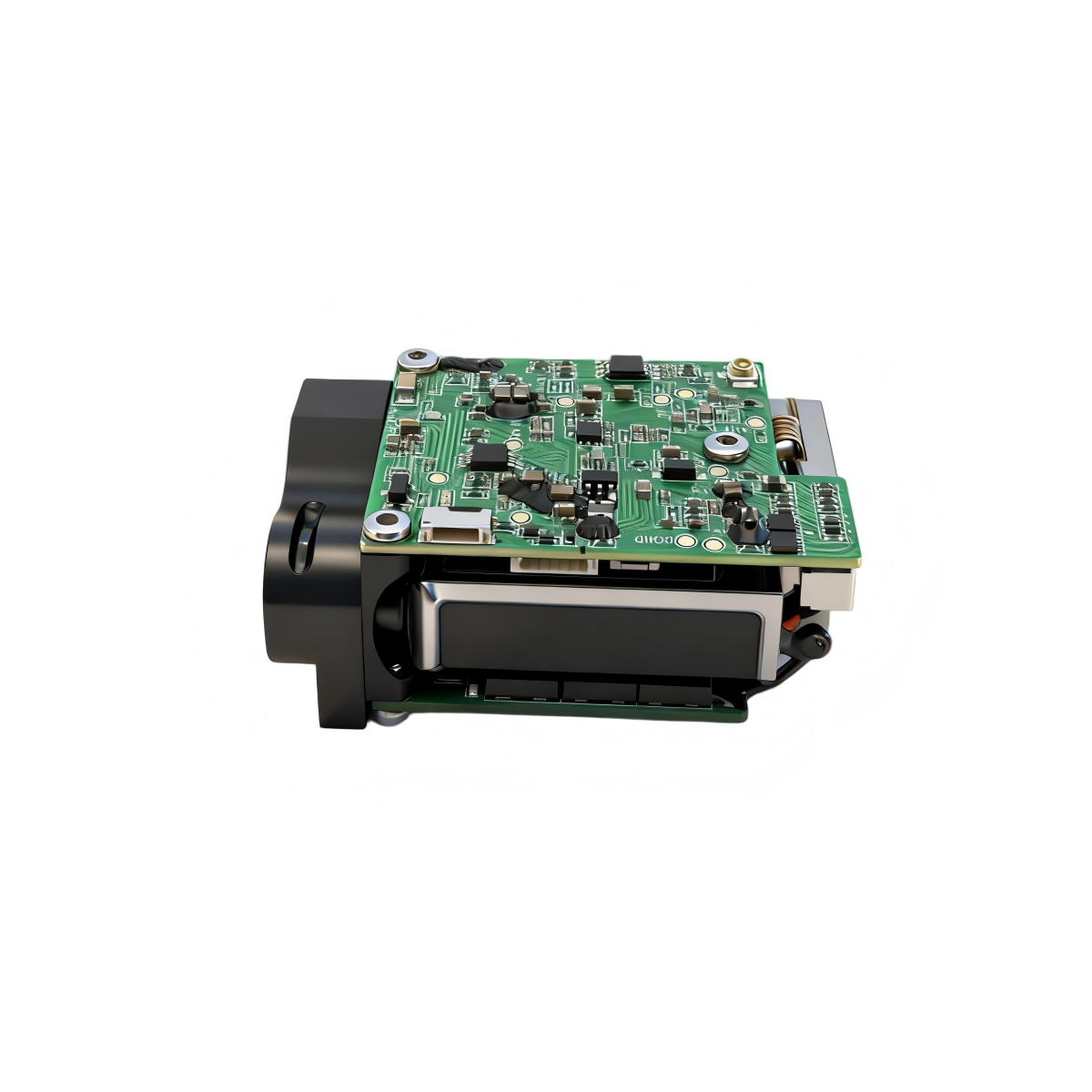
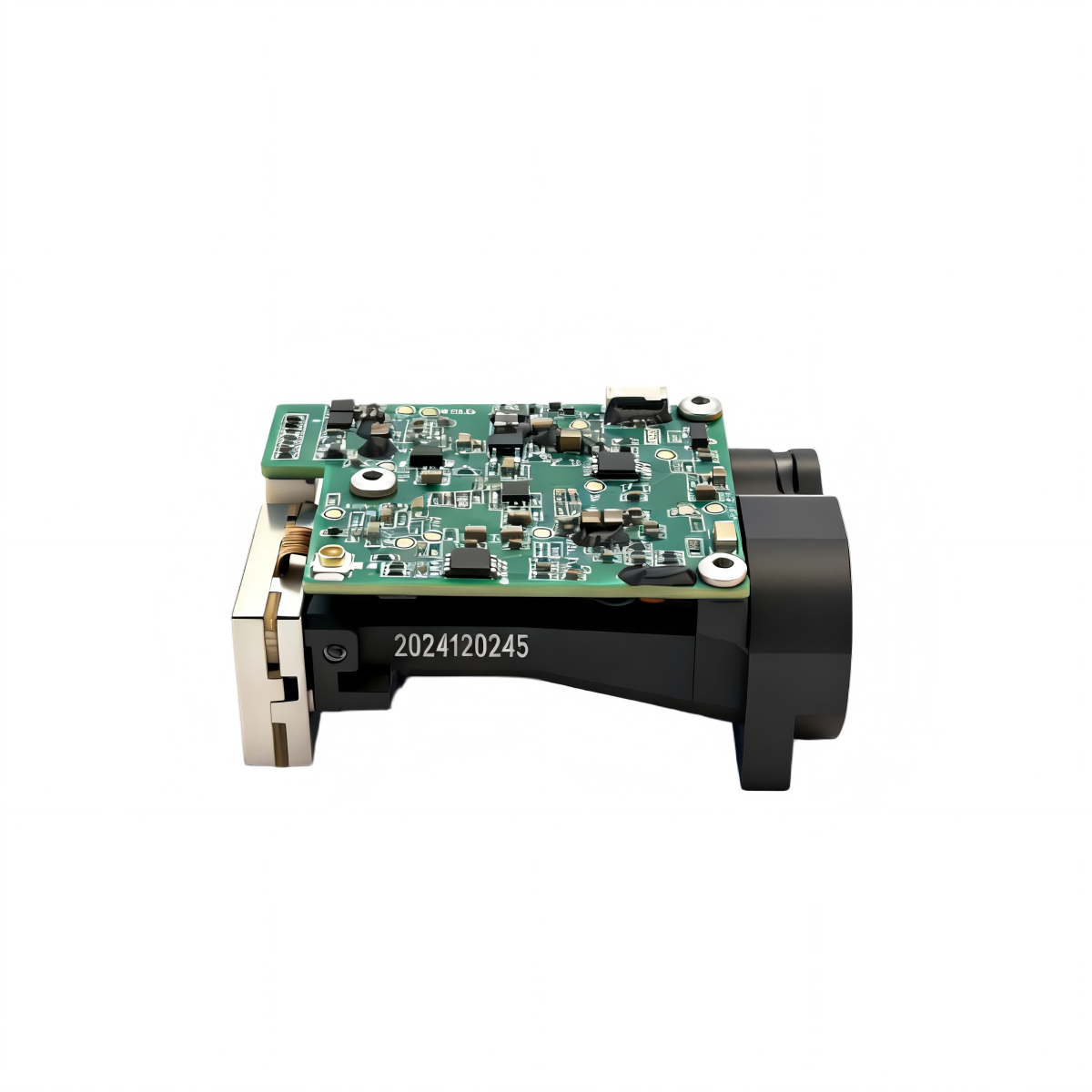
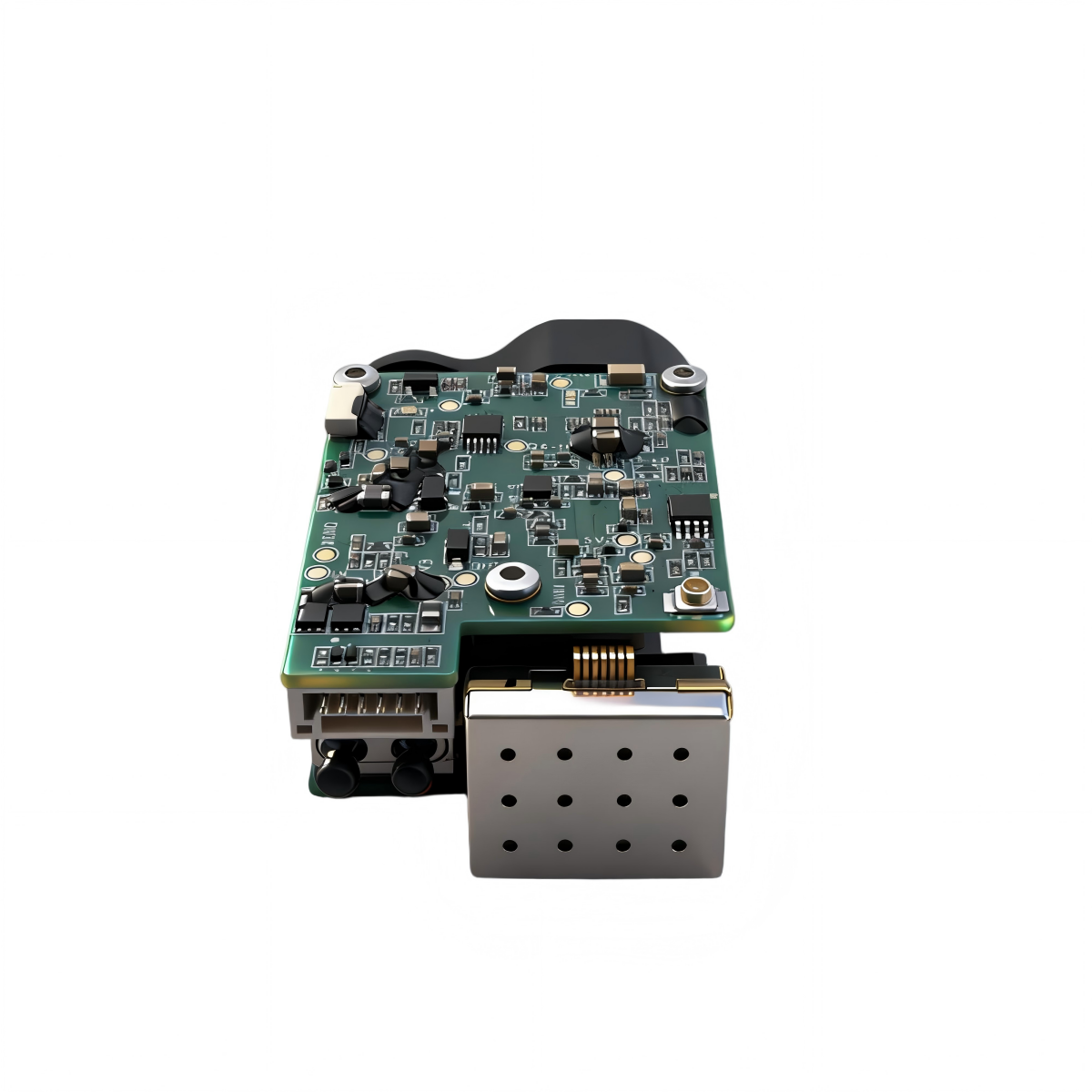
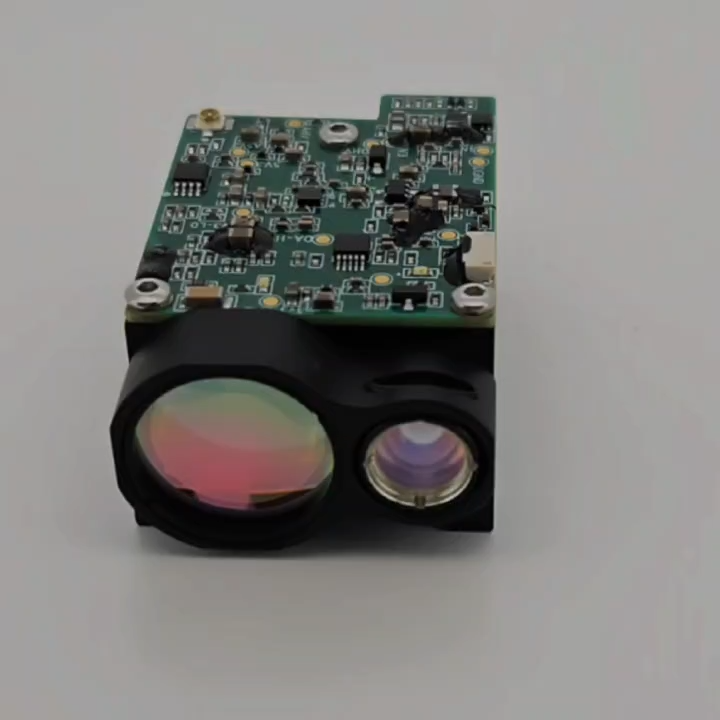
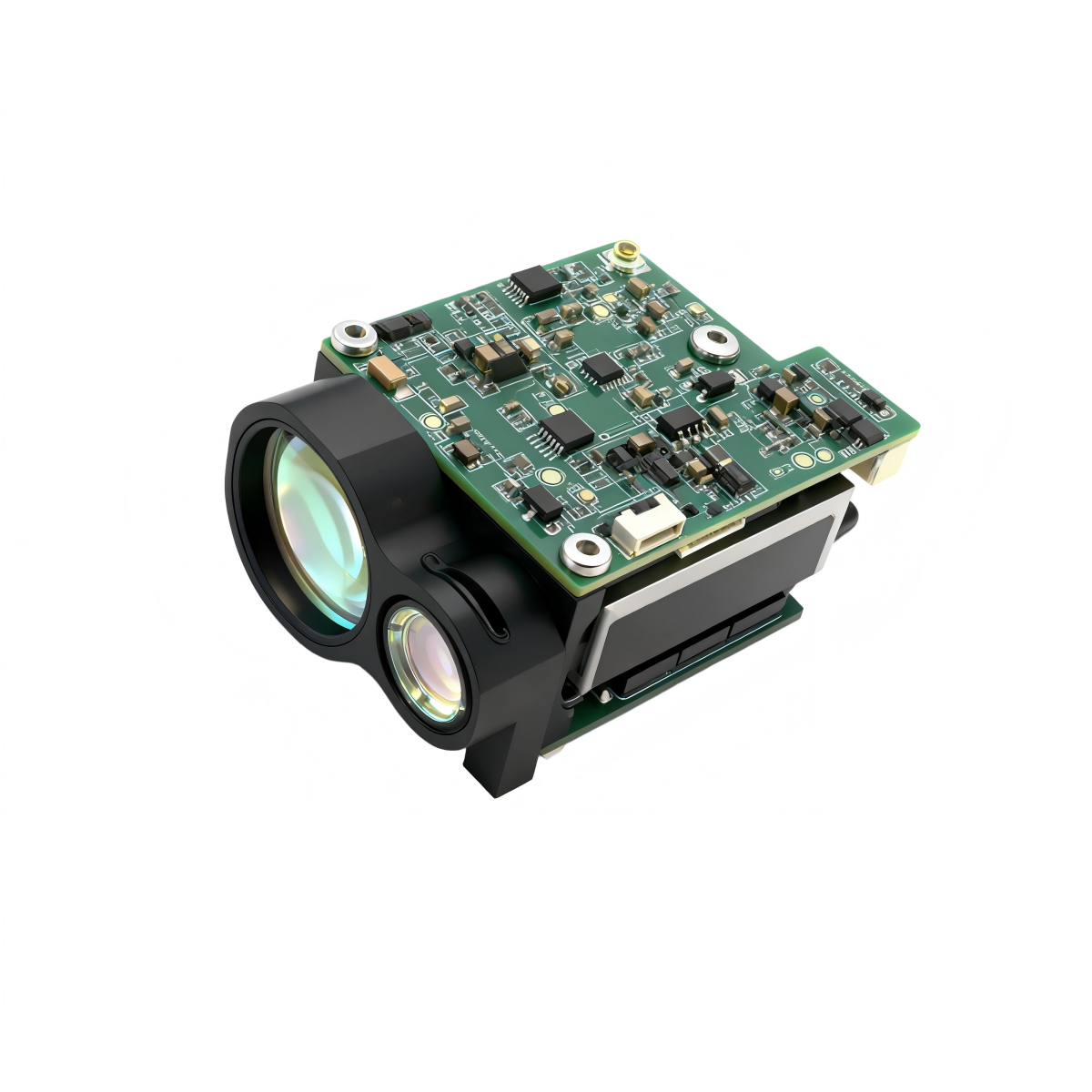
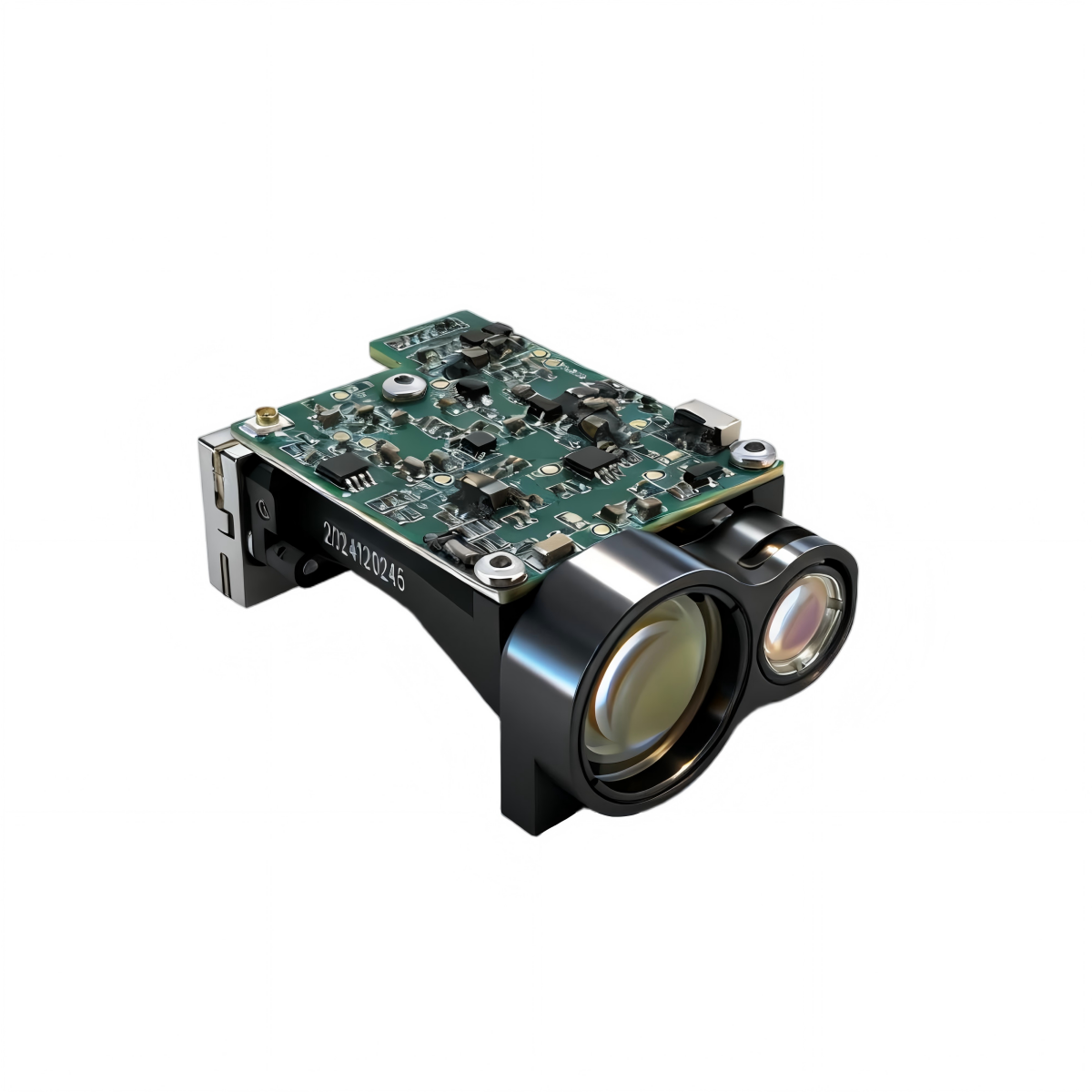
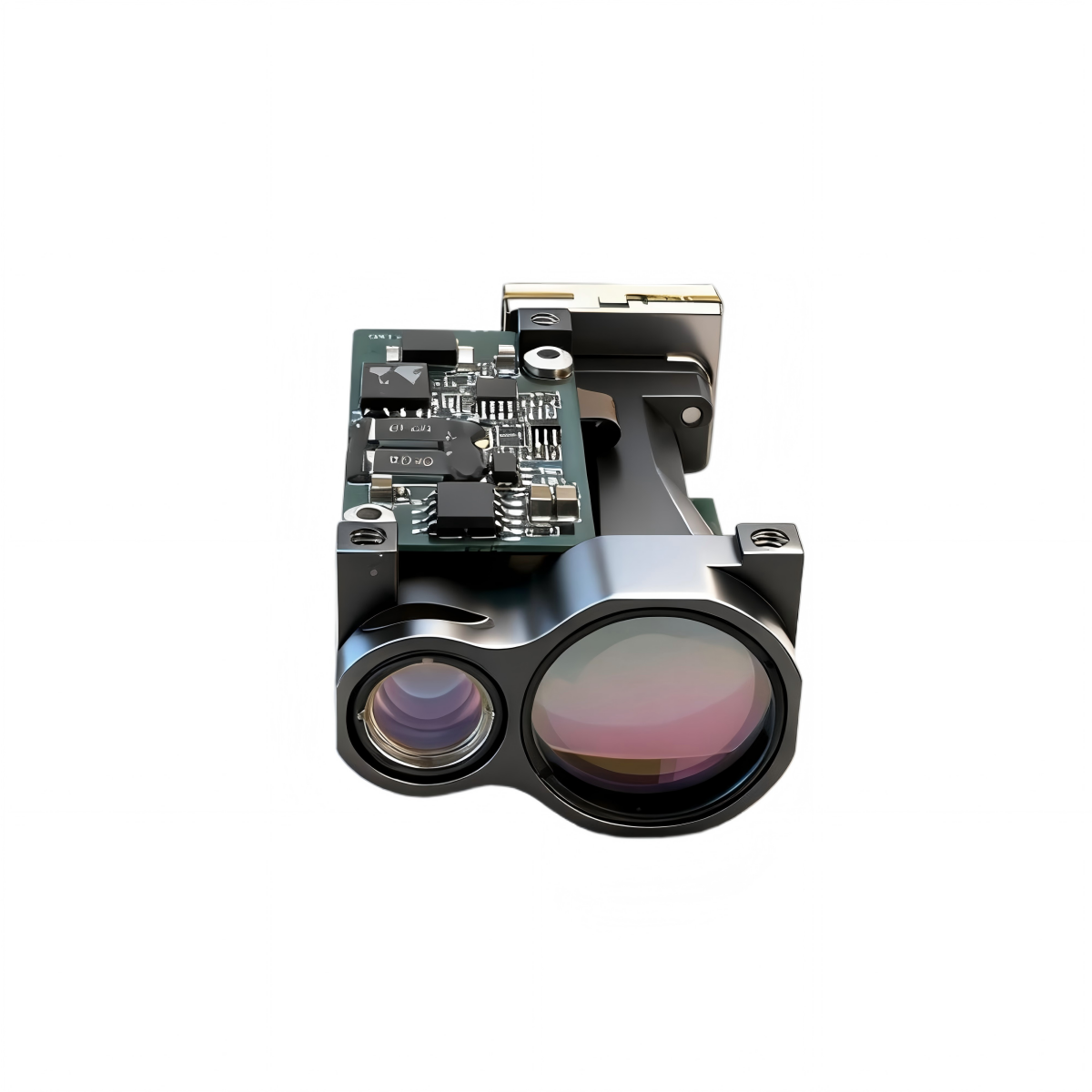
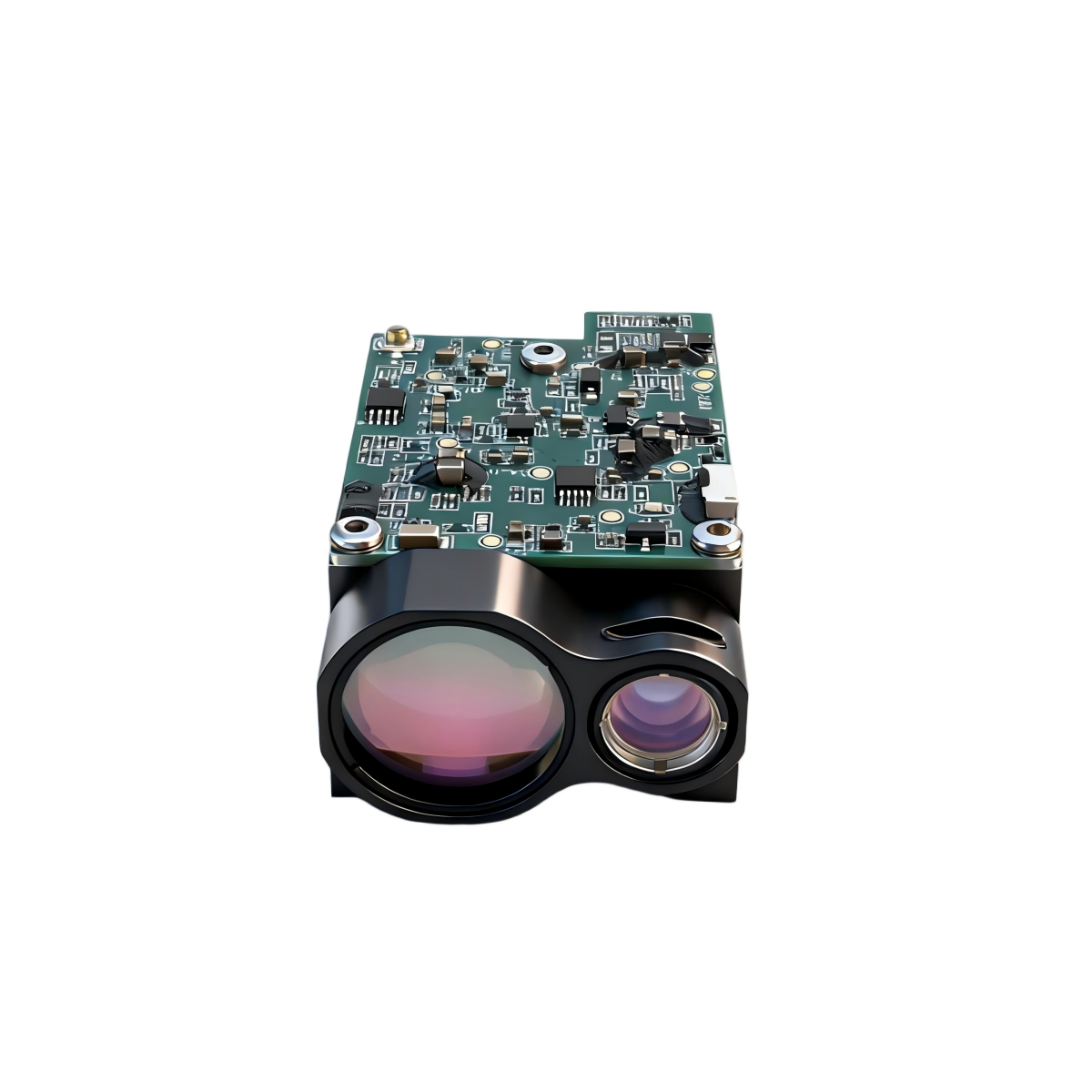
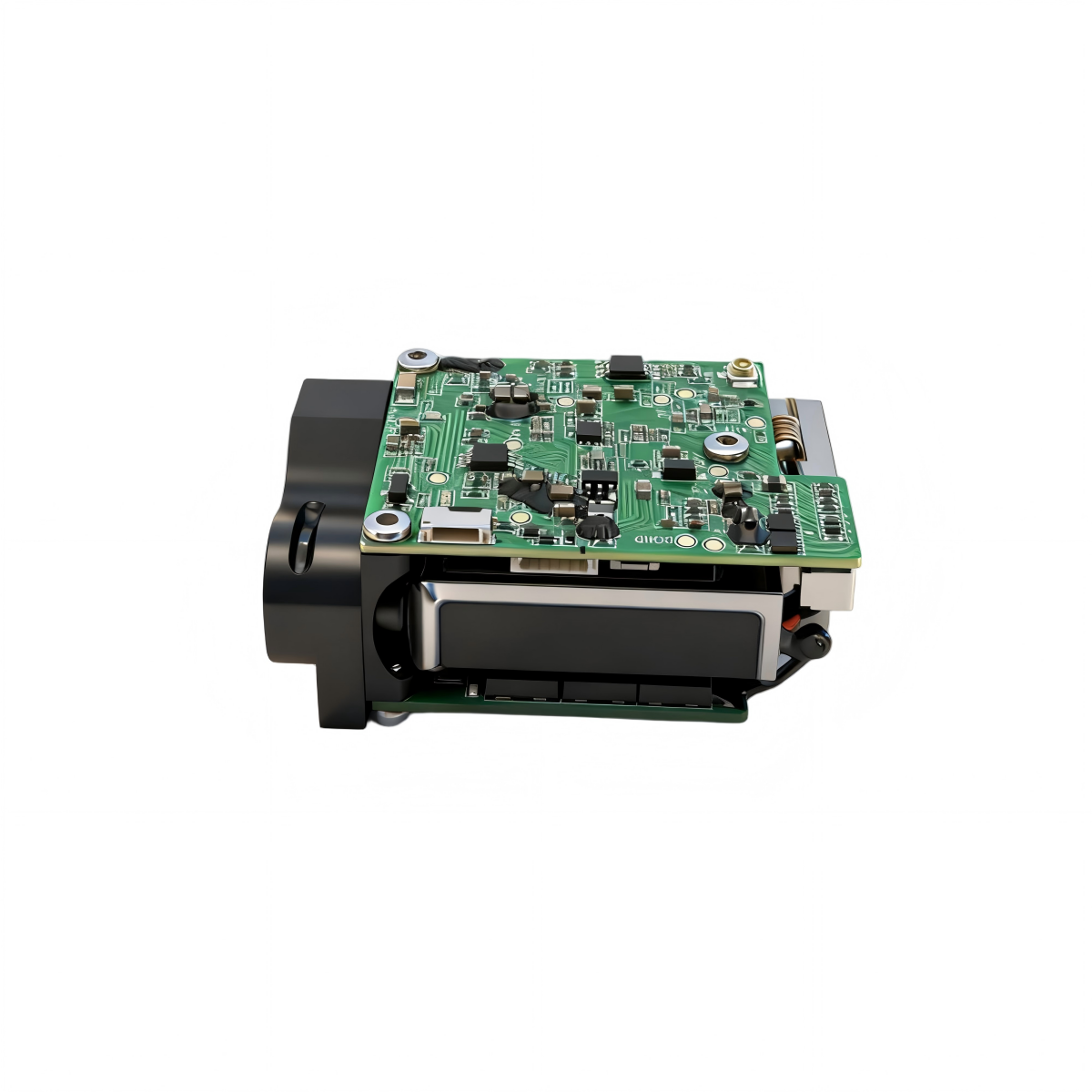
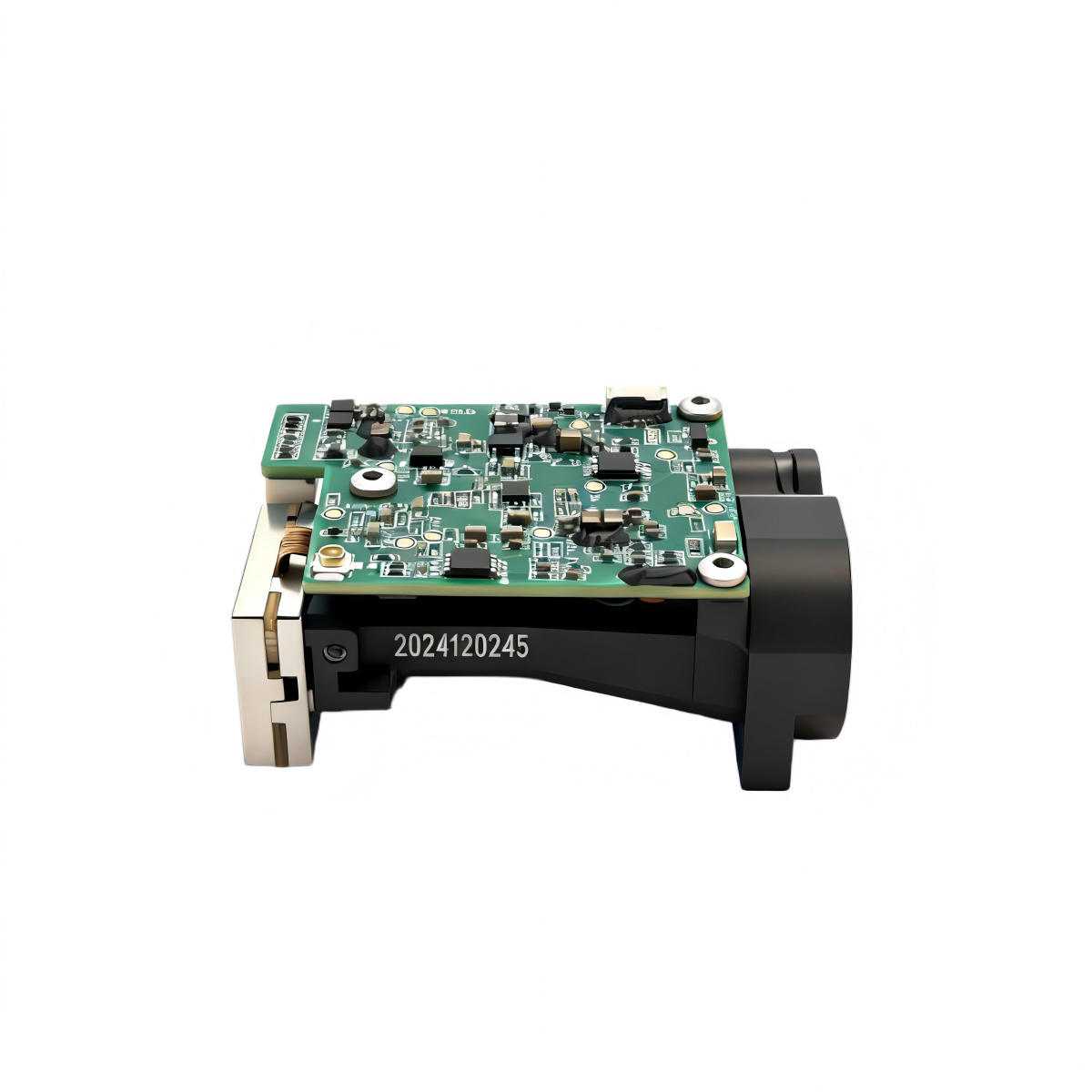
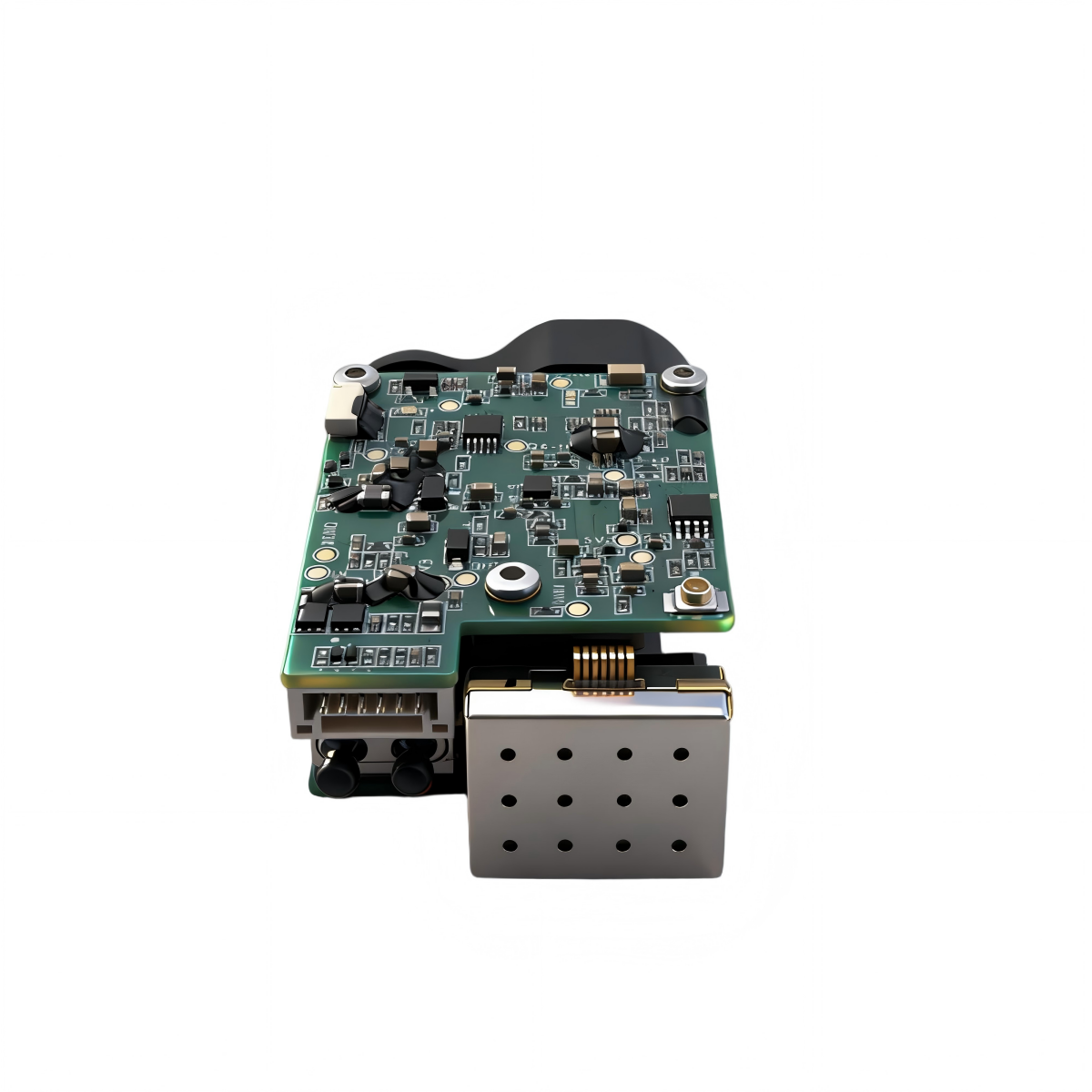
LRF0405C 4km 1535nm Eye-Safe Laser Rangefinder Module for UAV Gimbals, Vehicle EO/IR and Security Sensors

$1,000.00 USD $1,200.00 USD Reducere $200.00 USD
Calculul taxelor de expediere la finalizare
Product Model:LRF0405C

The LRF0405C is a 4km 1535nm Class I eye-safe laser rangefinder module delivering ≥200µJ pulses, ≤0.6mrad divergence and NATO-range performance of ≥4000m with ±2m accuracy and up to three simultaneous targets at 1–10Hz. Powered from a 3–5V supply with ≤2.5W average power in a 48×30.5×21mm, ≤32g housing and controlled via TTL UART, it is ideal for UAV gimbals, vehicle EO/IR turrets, handheld optics and fixed security or border-surveillance sensors.

Cantitate
Same Series View all 1535 nm models

Contact Us

Yilin, Senior Engineer at ERDI TECH LTD

Senior Engineer, Yilin

Tel : +86 28 81076698

WhatsApp : +86 18000520222

ERDI Pre-Sales Notice & Customer Information

(Please Read Before Purchase or Inquiry) Thank you for your interest in ERDI TECH LTD. We are committed to providing customers worldwide with high-precision, high-reliability laser products and technical solutions. Before placing an order, please read the following information carefully to better understand our company, services, and purchasing policies.

  • About ERDI​

     ERDI is a professional manufacturer specializing in the research, development, and production of laser modules, laser measurement systems, and related optoelectronic components.
    We integrate design, R&D, production, and sales, with a focus on safety, innovation, and precision.

    Our products are widely used in:

    • Industrial measurement and alignment systems
    • Scientific research and educational applications
    • Optical instrumentation and laser testing
    • Consumer and OEM laser solutions

    ERDI operates certified facilities and maintains rigorous quality control to ensure that every product meets international standards.

  • Global Presence and Trade Reliability​

    ERDI has established official stores on leading global platforms including Amazon, Alibaba International Station, and Made-in-China.com, allowing customers worldwide to purchase safely and conveniently. We are a verified and trusted factory, not a reseller, and we ensure that all transactions, quotations, and logistics follow transparent and secure trade practices.
  • Sample and Lead Time​

    To help customers evaluate our products and performance, we offer sample orders for most product categories.

    • Standard samplesare typically delivered within one week after order confirmation.
    • Customized modulesmay require additional processing time depending on design complexity and optical requirements.
      Our logistics team will provide real-time tracking and documentation for every shipment.
  • OEM / ODM / OBM Services​

     ERDI supports full-range customization including:

    • OEM (Original Equipment Manufacturing)– Products manufactured under your brand or part number.
    • ODM (Original Design Manufacturing)– Custom optical or mechanical design based on your specifications.
    • OBM (Original Brand Manufacturing)– Private-label solutions with our in-house R&D and branding support.

    We provide technical co-development, logo engraving, packaging customization, and batch production services to meet both small-scale and mass-production requirements.

  • Technical Support and Service System​

    ERDI maintains technical service centers and distribution partners worldwide, enabling rapid customer response.
    We provide:

    • Comprehensive technical consultation and project evaluation
    • One-on-one on-site technical assistanceat the customer’s facility when required
    • Lifetime after-sales supportand technical maintenance guidance

    Each laser product is delivered with a full set of user documentation, including Laser Module Usage Precautions and Safety Guidelines.

  • Quality Assurance and Warranty​

    ERDI implements strict multi-stage quality control throughout production:

    • Incoming material inspection
    • Optical alignment verification
    • Output power and wavelength calibration
    • Safety and durability testing under standard conditions

    We guarantee that all products leaving our factory meet design and performance specifications.
    Except for man-made damage, we will replace any defective unit within one year free of charge and provide lifetime maintenance support thereafter.

    For more details, please refer to our After-Sales Service & Warranty Policy.

  • Important Safety Reminder

    Before using any ERDI laser product:

    • Carefully read and follow the Laser Module Usage Precautions.
    • Always use appropriate laser protective eyewear.
    • Operate only in controlled environmentsunder trained personnel supervision.
      Failure to observe safety instructions may result in injury or equipment damage.
  • Communication and Order Confirmation​

    To ensure efficient service, please confirm the following before placing an order:

    • Product model, wavelength, output power, and working voltage/current
    • Whether you require custom mechanical dimensions, optical configurations, or driver circuitry.
    • Packaging, labeling, and shipping preferences.
    • Any specific export or compliance documentation needed for your country.

    Our sales engineers will provide an official quotation and delivery schedule upon confirmation of all specifications.

  • Final Statement​

    ERDI upholds the values of safety, integrity, and precision. We sincerely welcome customers from all over the world to visit our facilities, discuss cooperation, and experience our advanced laser technologies firsthand. Your satisfaction and trust are our highest pursuit.

After-Sales Service & Warranty Policy

We strive to provide high-quality laser modules and excellent customer service. Please read the following terms carefully to understand your rights and our responsibilities.

  • Product Origin and Quality Assurance​

    • All ERDI products are manufactured directly by the factory, ensuring consistent quality and full traceability.
    • We provide a diverse rangeof laser modules and laser distance measurement modules to suit various industrial, educational, and research applications.
    • Every product is tested and inspectedbefore shipment to guarantee that it meets specification standards.
  • Return and Exchange Policy​

    • Customers may request a return or exchange within 30 daysof receiving the goods, provided that:
    • The product remains in original condition, unused, and without affecting secondary sales.
    • A valid reason for return or exchangeis provided.
    • Upon approval, we will replace or refund according to our service policy.
    • The buyer is responsible for shipping costsassociated with returns, exchanges, or repairs, based on international freight cost rules.
  • Warranty Coverage​

    • The main functional componentsof ERDI laser products are covered by a 2-year warranty from the date of purchase, excluding cosmetic appearance.
    • Within the first 12 months, if a verified manufacturing defect occurs, we will replace the item with a brand-new productfree of charge.
    • Replacement of cosmetic or housing components (e.g., enclosure, labeling, or exterior parts) may incur a reasonable cost feebased on material expenses.
    • Warranty does not cover:
    • Damage due to misuse, improper installation, or modification.
    • Operation outside the recommended power supply or temperature range.
    • Accidental or physical damage, including drops, fire, or liquid ingress.
  • Receiving Inspection​

    • Upon delivery, please inspect the parcel immediately in the presence of the courier.
    • If there is any quantity discrepancy, visible damage, or mismatch, do not signthe delivery receipt.
    • Once the package is signed for (by you, family, or colleagues), it is considered accepted as correct and complete.
  • Customer Support

    For technical assistance, warranty claims, or safety inquiries, please contact our official service team through the contact information listed on erdicn.com.
    Our support engineers will provide professional guidance on installation, alignment, safety, and maintenance procedures.

Laser Module Usage Precautions

(Important – Buyers Must Read Before Use)

Operating laser modules involves potential optical and thermal hazards. To ensure safe and proper use, please read the following precautions carefully before powering on your laser product.

  • General Safety Warnings​

    • Invisible Radiation Warning– Some laser modules emit infrared (IR) or ultraviolet (UV) radiation that is invisible to the human eye. Never assume the laser is malfunctioning simply because you cannot see the beam. Always confirm that the power is disconnected before inspecting the module.
    • Do Not Look Directly into the Laser Aperture– Even when wearing certified laser safety goggles, never stare directly into or near the beam exit of a working laser module.
    • Avoid Reflected Beams from High-Power Lasers– Reflection from Class IV lasers (output power > 500 mW) can cause severe and permanent eye damage. Always wear wavelength-specific safety goggles when operating or aligning high-power laser systems.
    • Keep Away from Flammable Materials– Do not place flammable or explosive items (such as paper, cloth, leather, or plastics) in the laser path. Black or dark-colored materials absorb laser energy more easily and may ignite. (Exception: controlled material-burning experiments with proper fire protection.)
    • Avoid Direct Human Exposure– Class IIIa or higher lasers (≥ 5 mW) can burn skin or eyes. Never point a laser beam at any part of a person’s body.
    • Restrict Access to Trained Personnel Only – Keep all laser devices out of reach of untrained individuals, children, and pets.
  • Optical Path and Reflection Safety​

    • Never Aim Toward Glass Surfaces– Ordinary glass reflects roughly 4 % of incident light, which can redirect dangerous laser radiation into your eyes. Avoid operating lasers in front of mirrors or reflective windows.
    • Working Plane Awareness– When setting up an experimental platform, note the laser emission height. Do not position your head or eyes near this level during operation. Lenses and mirrors may reflect or refract light unexpectedly. Always align optical components downward or horizontally—never angle a beam upward.
    • Remove Reflective Accessories– Watches, jewelry, and other shiny objects can reflect laser light unpredictably. Remove them before use.
    • Infrared Beam Detection– IR lasers (wavelength > 800 nm) are almost completely invisible. Use a beam-viewing card, IR detector, or up-conversion screen to visualize the beam path safely.
    • Visual Brightness Misjudgment– Some wavelengths (below 430 nm or above 700 nm) appear much dimmer than their actual power output. Do not rely on visual brightness to judge beam intensity.
    • Pulsed Laser Caution– Pulsed lasers can have extremely high peak power even at modest average power levels. Verify that all optical elements and samples in your experiment exceed the laser’s damage threshold before exposure.
    • Prohibited Uses– It is strictly forbidden to point laser beams at moving vehicles, aircraft, or any area where light could distract or endanger others.
    • End-of-Beam Safety Stop– Always place a black anodized or matte metal plate at the end of your optical path to absorb residual energy and prevent laser leakage into surrounding areas.

    Low-Power Modules – ERDI laser modules rated below 1 mW are considered eye-safe under normal operating conditions and can be used without hazard when handled properly.

  • Recommended Protective Measures​

    • Protective Eyewear– Always wear certified laser safety goggles designed for the specific wavelength and power level of your module.
    • Appropriate Clothing– Light-colored or white long-sleeved clothing reduces the risk of heat absorption or ignition if stray laser light contacts the fabric.
    • UV Laser Protection– For ultraviolet lasers, apply broad-spectrum sunscreen (SPF 30 or higher) to exposed skin areas to minimize UV radiation effects.
    • Environmental Safety– Operate lasers in a controlled laboratory or industrial environment with minimal reflective surfaces. Ensure that all personnel nearby are informed of ongoing laser use and have received proper training.

Model-level data

Detailed LRF0405C Specifications

Values below are reorganized from the current ERDI marketing specification. Confirm the controlled datasheet revision, connector drawing and acceptance conditions with the quotation.

Basic Ranging Performance

Model LRF0405C
Specified minimum range 15 m or less
2.3 m x 2.3 m target range 4,000 m or more at 30% reflectance and visibility of at least 5 km
0.5 m x 1.7 m human-size target range 1,200 m or more at 30% reflectance and visibility of at least 5 km
Ranging frequency Single measurement or 1 to 10 Hz
Multi-target reporting Up to 3 targets
Ranging accuracy +/-2 m
Reported range resolution 0.1 m or better
Valid measurement rate 98% or higher under specified test conditions
False-alarm rate 1% or lower under specified test conditions

Optical Parameters

Laser wavelength 1535 +/- 5 nm
Laser-safety rating Class I stated in the module specification; the finished integrated product requires its own safety assessment
Pulse energy 200 microjoules or more
Beam divergence 0.6 mrad or less
Transmitter lens diameter 8 mm
Receiver lens diameter 16 mm

Electrical and Communication Interface

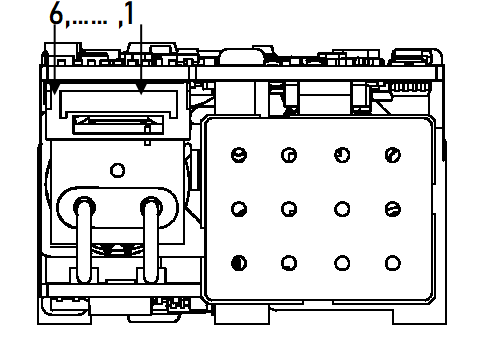
Connector model FWF08002-S06B13W5M
Communication interface UART, 3.3 V TTL level
Marketing specification supply entry DC 3 to 5 V
Interface-table supply entry 4.5 to 16 V
Power-control input POWER_ON; module on above 2.7 V and off below 0.3 V, as stated in the current interface table
Standby power 1 mW or less
Average power 2.5 W or less at 10 Hz
Peak power 7 W or less; the current source references 12 V

Five-Pin Interface

Pin 1 Positive power supply; red conductor
Pin 2 Power ground; black conductor
Pin 3 POWER_ON control; white conductor
Pin 4 UART_TX, 3.3 V TTL; yellow conductor
Pin 5 UART_RX, 3.3 V TTL; green conductor

Mechanical and Environmental

Dimensions (L x W x H) 48 x 30.5 x 21 mm
Weight Current marketing source states 32 +/-1 g maximum; confirm the controlled value
Operating temperature -40 to +70 degrees C
Storage temperature -55 to +75 degrees C
Impact resistance Specified to meet MIL-STD-810G testing; confirm method, severity and acceptance criteria for the order
Vibration resistance Specified to meet MIL-STD-810G testing; confirm method, severity and mounting condition for the order

Engineering caution: The current marketing specification contains conflicting supply entries: DC 3 to 5 V in the main table, 4.5 to 16 V in the pin table, and a 12 V reference for peak power. Do not energize the module from this web page alone. Use the controlled interface drawing and written order configuration.
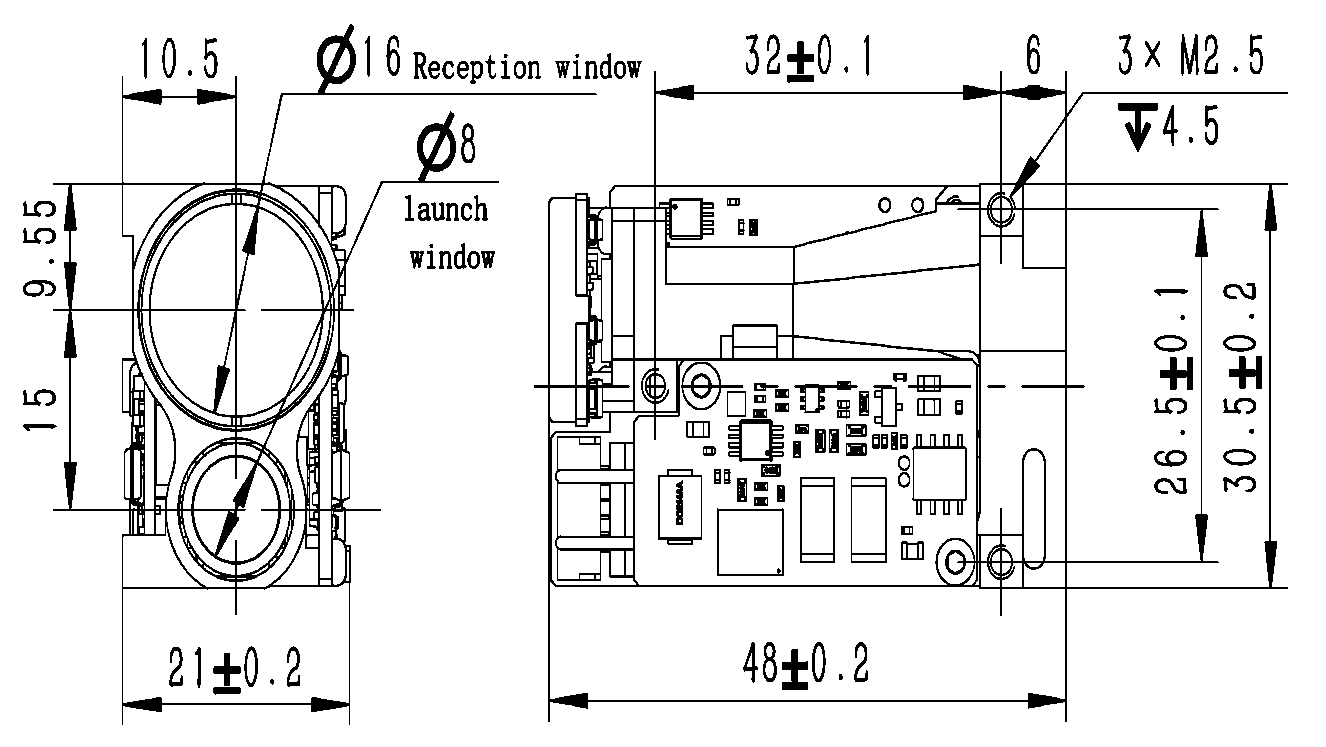
LRF0405C 4 km 1535 nm eye-safe laser rangefinder module outline dimensions for OEM integration
LRF0405C outline and mounting reference. Request the controlled mechanical drawing before releasing the host enclosure or optical-window geometry.
LRF0405C UART five-pin electrical interface reference
LRF0405C electrical-interface reference. Confirm connector orientation, pin numbering and supply limits against the controlled drawing.

How it works

Pulsed Time-of-Flight Ranging

The LRF0405C emits a short 1535 nm optical pulse, collects reflected energy through its receiver aperture and measures the round-trip delay between transmission and an accepted echo.

Achievable field range depends on the complete optical link budget: pulse energy, beam divergence, target area and reflectance, atmospheric transmission, receiver aperture, optical-window loss, detector sensitivity and the signal-processing threshold.

Reporting up to three targets can help a host distinguish accepted return peaks from layered scenes such as foliage before terrain or a vehicle before a building. The host system must define which reported echo is operationally relevant.

R = c x delta-t / 2R is distance, c is the speed of light and delta-t is the measured round-trip propagation time.

How this wavelength compares with common alternatives

Wavelength family Engineering strengths Integration considerations
1535/1550 nm Well suited to eye-safety-oriented compact ranging architectures and compatible with InGaAs-class receivers. Detector and optical-component cost can be higher than in silicon-based 905 nm systems. The finished product still requires a complete laser-safety assessment.
905 nm Broad silicon-detector ecosystem, compact components and cost-effective high-volume sensing. Accessible-emission limits, detector dynamic range and solar-background rejection must be evaluated for the required range and final laser class.
1064 nm Common in high-energy ranging, designation and compatible electro-optical systems. It is not an automatic substitute for a 1535 nm eye-safety-oriented module; detector choice, coatings, safety controls and mission architecture differ.

Wavelength alone does not determine fog performance, field range or laser classification. Select a wavelength from the complete safety, target, atmosphere, detector, optical-window and cost trade space.

Core advantages

Designed for Compact OEM Integration

Each feature is tied to a system-level decision that should be reviewed during host design and validation.

Compact mechanical envelope

The stated 48 x 30.5 x 21 mm outline supports small gimbals, handheld optics and compact EO/IR payloads, subject to connector, cable-bend and thermal-clearance requirements.

Low-mass payload option

The current marketing source identifies an approximately 32 g class module. Confirm the controlled mass and cable contribution before closing the platform weight budget.

Multi-echo scene information

Up to three reported targets can give the host more information in layered scenes. Selection logic should be validated against the intended observation or tracking behavior.

Selectable update behavior

Single measurement and 1 to 10 Hz operation let the host trade update rate against power, thermal load and scene requirements.

Narrow optical architecture

The specified pulse energy, beam divergence and receiver aperture support concentrated transmit energy and compact long-range return collection.

Simple UART host interface

A five-pin UART interface can simplify integration, but the conflicting published supply entries make the controlled connector drawing mandatory before prototype power-up.

Engineering applications

Integration Scenarios for the LRF0405C

The module is intended for OEM integration, so optical, electrical, mechanical and software interfaces must be validated as one system.

UAV gimbals and EO/IR payloads

Use range data for geolocation, observation and sensor cueing. Verify payload mass, regulator transient response, boresight stability, vibration and optical-window transmission before flight qualification.

Vehicle observation systems

Review grounding, cable routing, thermal paths, shock isolation and window contamination for mobile installations exposed to vibration and changing weather.

Handheld and portable optics

Plan battery capacity, control logic, protective optics and accessible-emission evaluation around the selected repetition rate and finished enclosure.

Fixed security and monitoring sensors

Validate target reflectance, visibility, mounting stability, weather sealing and maintenance access under the actual observation geometry.

Review the complete host interface

Share the target definition, optical window, cable length, supply limits, mounting envelope, environment and annual quantity for a model-specific integration review.

Technical FAQ

Questions System Integrators Ask

Does the 4 km specification apply to every target?

No. The stated 4 km figure is associated with a 2.3 m x 2.3 m target, 30% reflectance and visibility of at least 5 km. Smaller, darker, oblique or obscured targets and degraded weather can reduce achievable range.

Is the finished product automatically Class I after integration?

No. The current module specification states Class I, but the accessible emission of the finished product depends on the host window, control logic, service access and failure conditions. The final system requires its own safety assessment.

Which supply voltage should an integrator use?

Do not select a supply from the web page alone. The current source contains conflicting entries: DC 3 to 5 V, 4.5 to 16 V and a 12 V peak-power reference. Obtain the controlled interface drawing and written configuration before energizing the module.

Why can the module report up to three targets?

One transmitted pulse may produce several accepted return peaks from objects at different distances. Multiple reported targets let the host select the echo that matches its operating logic.

What should be included in a technical inquiry?

Provide target size and reflectance, required range, visibility assumptions, update rate, connector and cable requirements, supply limits, available volume and mass, operating temperature, host-window details and expected annual quantity.

Engineering references

  1. Burns, Christodoulou and Boreman, System Design of a Pulsed Laser Rangefinder, Optical Engineering, 1991
  2. Ma et al., The Short-Range, High-Accuracy Compact Pulsed Laser Ranging System, Sensors, 2022
  3. Duthon, Colomb and Bernardin, Light Transmission in Fog, Applied Sciences, 2019
  4. IEC 60825-1, Safety of laser products - Part 1

References provide general engineering context. Purchase specifications, interface documents and acceptance criteria are controlled by the ERDI document revision supplied with the order.

Technical resources

Download LRF0405C Product Data

Use the current product information for early-stage comparison. Obtain the controlled datasheet, interface protocol and mechanical file before design release or purchase.

PDF

Controlled LRF0405C Datasheet

Request the current model specification and revision-controlled acceptance conditions.

Request Current PDF
3D

Mechanical and Interface Package

Request the controlled outline drawing, connector definition and available 3D model.

Request Engineering Files

Start the engineering review

Discuss Your LRF0405C Integration

Share the host envelope, target definition, interface, environment and quantity. ERDI will help identify the controlled documents and configuration required for evaluation.
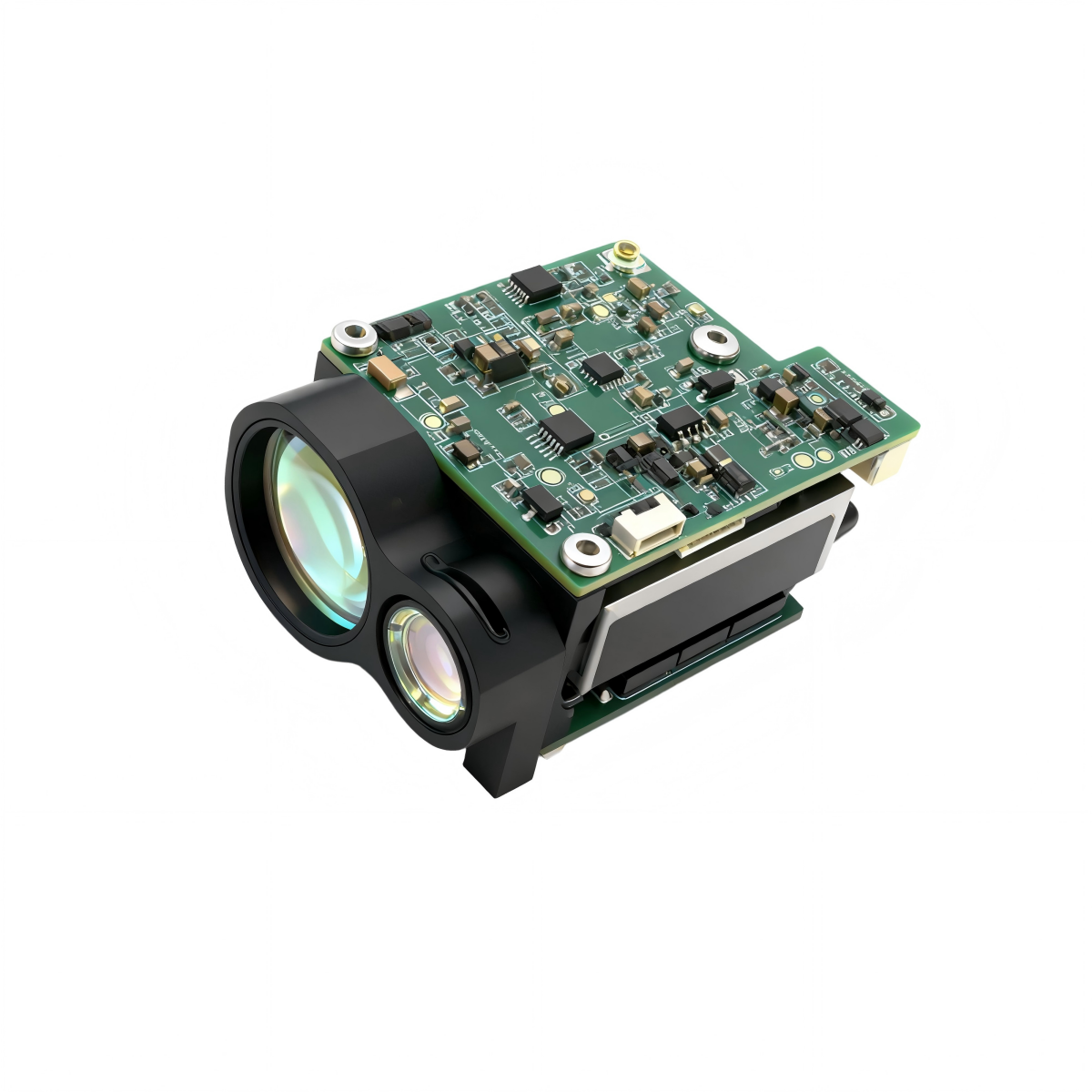
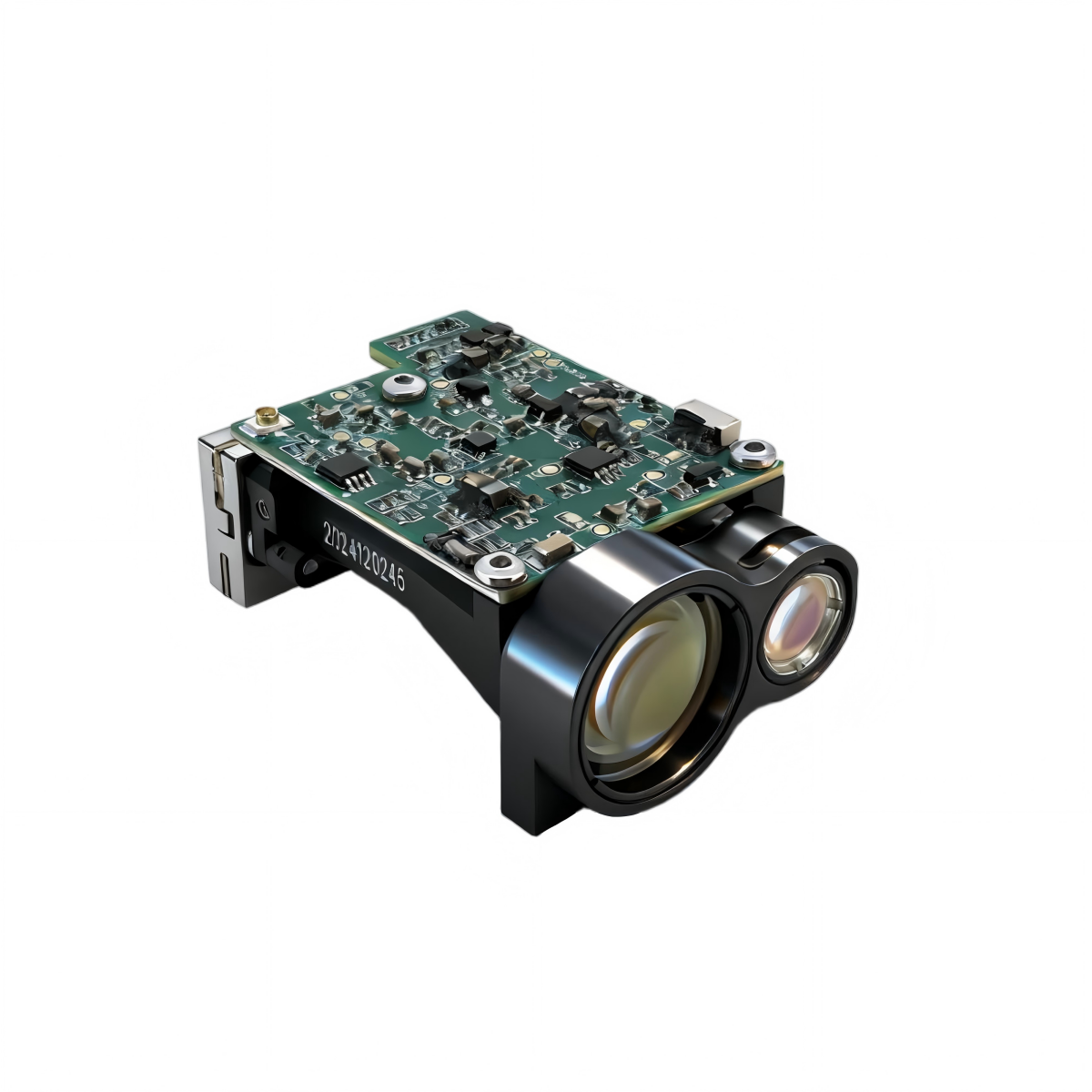
1535nm eye-safe laser rangefinder module 4km LRF0405C 1535nm eye-safe laser rangefinder module 4km LRF0405C 1535nm eye-safe laser rangefinder module 4km LRF0405C 1535nm eye-safe laser rangefinder module 4km LRF0405C 1535nm eye-safe laser rangefinder module 4km LRF0405C 1535nm eye-safe laser rangefinder module 4km LRF0405C 1535nm eye-safe laser rangefinder module 4km LRF0405C