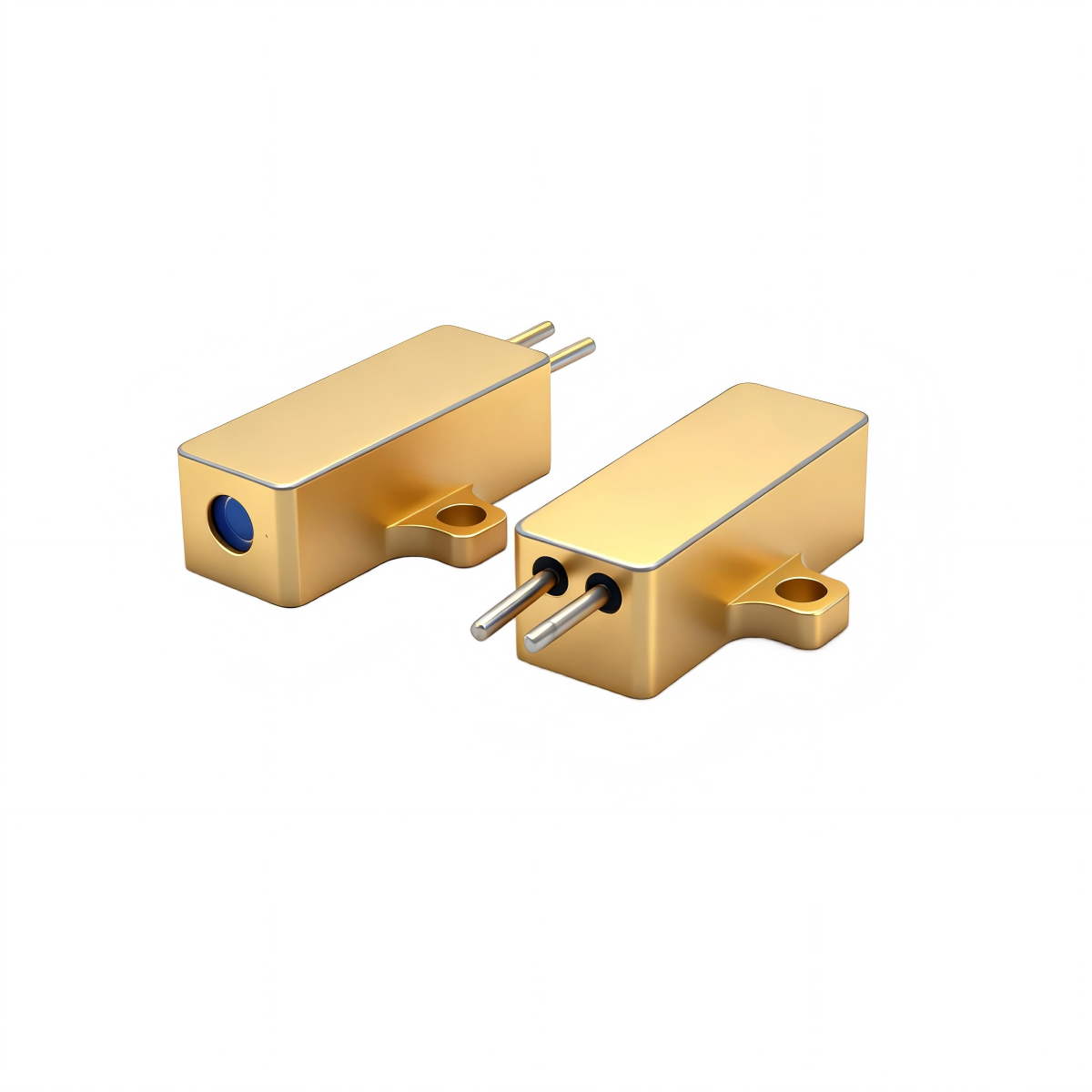


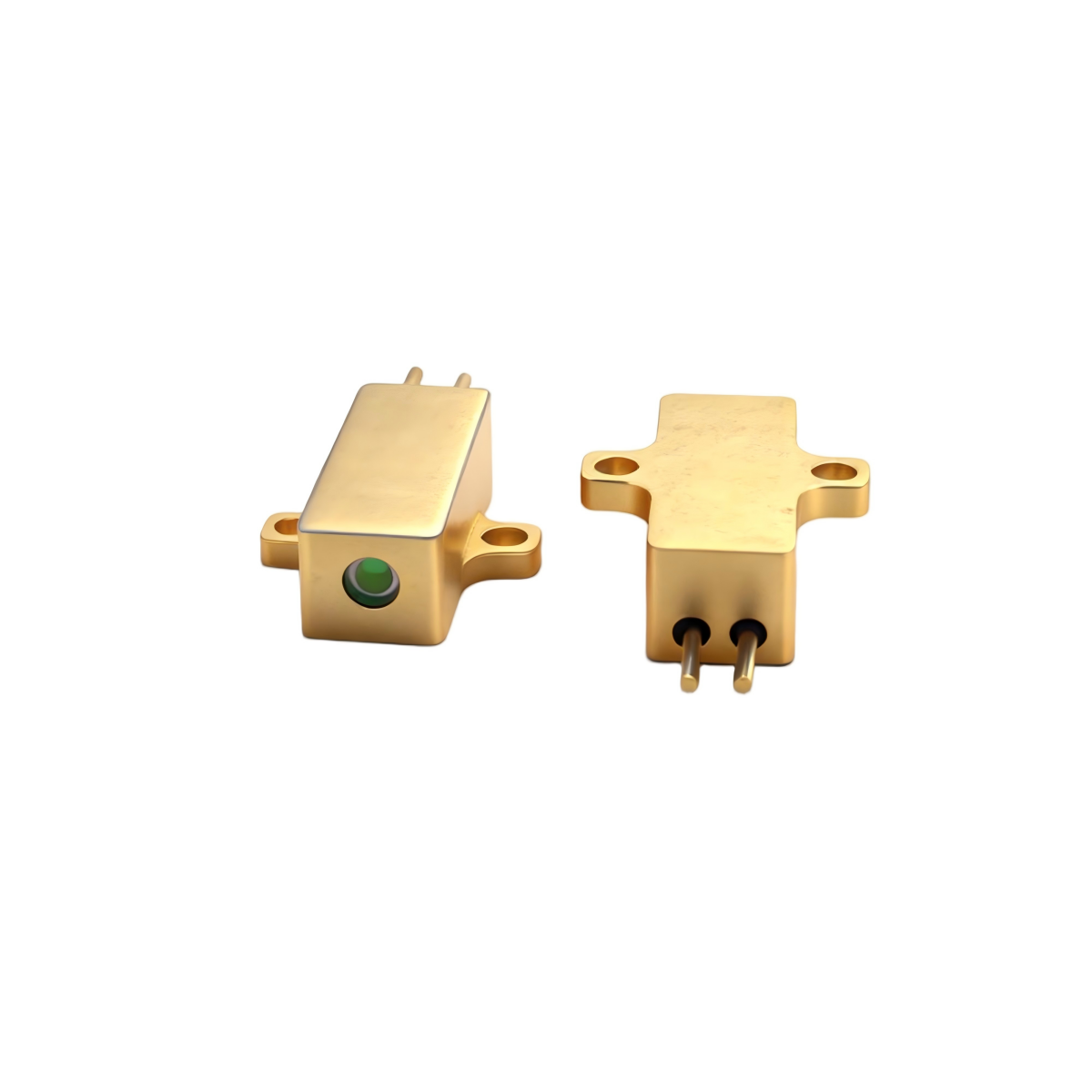


ER100 1535nm 100µJ Eye-Safe Erbium Glass Laser for Mini Rangefinders and LiDAR
PRODUCT OVERVIEW
ER100 is a compact 1535 nm pulsed laser source based on Er:Yb glass microchip technology, designed for mini rangefinders and LiDAR.
- Pulse energy
- ≥100 µJ
- Repetition rate
- 1~10Hz
- Pulse width
- 6 ns
- Dimensions
- 21×8×6.8 mm3
- Weight
- 7 g
KEY FEATURES
- ✔ 1535 nm Eye-Safe Operation (Class 1)
- ✔ 100µJ Pulse Energy
- ✔ Compact OEM Design
- ✔ High Pulse Stability
- ✔ Long Lifetime
Optical Specifications
| Wavelength | 1535 nm |
|---|---|
| Pulse Energy | ≥100 µJ |
| Pulse Width | 6 ns |
| Beam Quality | TEM00 |
| Operation | Pulsed |
| Lifetime | ≥10 million shots |
| Drive pulse width | ≤2.4 ms |
| Pulse repetition rate | 1~10Hz |
| Pulse stability | 10% |
| Raw Beam Diameter | 0 .3 mm |
| Beam divergence angle | ≤ 8 mrad |
Mechanical and Environmental Specifications
| Operating temperature | -40 ℃ ~ +65 ℃ |
|---|---|
| Storage temperature | -55 ℃ ~+ 75℃ |
| Dimension (mm) | 21×8×6.8 mm3 |
| Weight | 7 g |
| Voltage | 2 V |
| Electric current | 8 A |
| Shock | 1500 G, 0.5 ms |
| Vibration | 20~2000 Hz/20 G |
Integration Considerations
Review package constraints, electrical requirements and thermal conditions before integration. The driver supply must be matched to the specified voltage and current, and the drive pulse width must remain within the stated limit. For application-specific questions, contact our engineering team with your system requirements.
APPLICATIONS




DOWNLOADS
- Datasheet (PDF)
- 3D model (GLB) — open in any 3D viewer or CAD tool
- Outline drawing (STEP) — request from our team
- Integration guide — request from our team
Product Description
ER100 1.54 µm / 1535 nm Eye-Safe Erbium Glass Microchip DPSS Laser
The ER100 is a 1535nm eye-safe erbium glass DPSS laser designed as a compact, board-level source for modern laser rangefinders and LiDAR systems. Using co-doped Er:Yb phosphate glass pumped by a semiconductor laser diode, it emits at 1.54 µm in the Class 1 eye-safe band, combining small size, low weight and robust performance for outdoor long-distance optical transmission.
With pulse energy ≥ 100 µJ, a typical pulse width of 6 ns and a repetition rate from 1 to 10 Hz, the ER100 provides a clean, nanosecond pulse suitable for time-of-flight ranging down to centimeter-level resolution. Pulse stability is within 10%, while the raw beam diameter is about 0.3 mm and the beam divergence is ≤ 8 mrad in a TEM₀₀ mode, making it easy to collimate or couple into small-aperture transmit optics.
The module is engineered for demanding field environments. It operates from −40 °C to +65 °C and can be stored from −55 °C to +75 °C, with mechanical robustness verified against shock and vibration tests in line with MIL-STD-810G. Service life is specified as ≥ 10 million shots, supporting long-term deployment in mission-critical systems.
Physically, the ER100 fits into a 21 × 8 × 6.8 mm³ package and weighs only 7 g, making it suitable for direct integration onto rangefinder or sensor PCBs where every millimeter and gram matters. It typically operates from a 2 V drive with an 8 A current pulse and a driver pulse width ≤ 2.4 ms; identical parameters are used in the driver setup guidelines, where users are instructed to verify voltage, current, pulse width and frequency before enabling emission.
The laser is intended to be used with a dedicated pulsed driver. Recommended procedures include pre-power inspection (checking wiring, polarity, connector seating and a clean output window), a defined power-on sequence, parameter setting according to the factory test report, monitored laser emission and a controlled shutdown sequence. These steps help prevent over-current or thermal stress and ensure stable operation throughout the device lifetime.
Thanks to the 1.5 µm wavelength band, the ER100 enjoys low atmospheric attenuation and strong penetration through haze, rain and aerosol, while also being strongly absorbed by the anterior structures of the eye, greatly reducing retinal risk and enabling eye-safe operation in man-in-the-loop scenarios. Typical applications include handheld and weapon-mounted laser rangefinders, micro and small UAV EO/IR gimbals, compact LiDAR for mapping and obstacle detection, structural health monitoring in industrial sites, and embedded laser sources in microjoule-level rangefinding modules.
OUTLINE DIMENSION

Figure 1 Outline Dimensions(mm)
Operation Instructions
- Pre-Power Inspection
- Confirm that the laser and driver have been correctly wired according to the wiring diagram.
- Verify that the driver output voltage, current, pulse width, and repetition rate settings meet the limits specified for the ER100 (typical load voltage < 2 V, operating current 8 A, pulse width < 2 ms, repetition rate 10 Hz, unless otherwise stated in the factory test report).
- Make sure all connectors are firmly seated and that there are no loose wires, short circuits, or reversed polarity.
- Check that the laser output window is clean and free of dust, fingerprints, or other contamination.
- Power-On Sequence
- Ensure that the driver output is disabledbefore powering on the system.
- Switch on the main power supply of the driver and confirm that the driver powers up normally (status indicators, GUI, or monitoring interface show no alarms).
- Wait for the driver and system to complete any internal self-tests, if applicable.
- Parameter Setting
- According to the attached factory test report, set the driver parameters (output current, pulse width, repetition frequency, and any timing or trigger settings) to the recommended values.
- If the system supports external triggering, verify that the trigger source (internal / external), trigger level, and timing configuration are set correctly.
- Confirm the final parameter values on the GUI or front panel before enabling laser output.
- Laser Emission Operation
- Enable the laser output on the driver (via “Enable” button, GUI command, or hardware switch, depending on the specific driver).
- Observe the driver status indicators and any monitoring signals to confirm that laser emission is normal and no over-current, over-temperature, or fault alarms are present.
- During operation, do nottouch or obstruct the laser output window, and strictly follow the applicable laser safety regulations (wear appropriate protective eyewear, avoid direct or specular reflections into the eyes, and control the beam path).
- Shutdown Procedure
- First disablethe laser output on the driver.
- After confirming that laser emission has stopped, switch off the main power supply of the driver.
- If the system has a cooling fan or other thermal management devices, allow sufficient time for the system to cool down before disconnecting power completely or performing any maintenance.
- Post-Operation Checks
- Inspect the laser and driver for abnormal odors, discoloration, or mechanical damage.
- Check the connectors and cables to ensure there is no overheating or insulation damage.
If any abnormal condition or alarm is observed, stop using the device and contact technical support before the next operation.
Product FAQ
- Is this an eye-safe source?
Class 1 eye-safe at the specified 1535 nm wavelength. - What is the typical use?
Rangefinding, LiDAR, sensing and OEM instrument integration. - Can the package be customised?
See OEM / ODM for the customisation scope and review process.
Interactive 3D Model
Drag to rotate, scroll to zoom. The controlled STEP source is available on request for design release.
ER100